
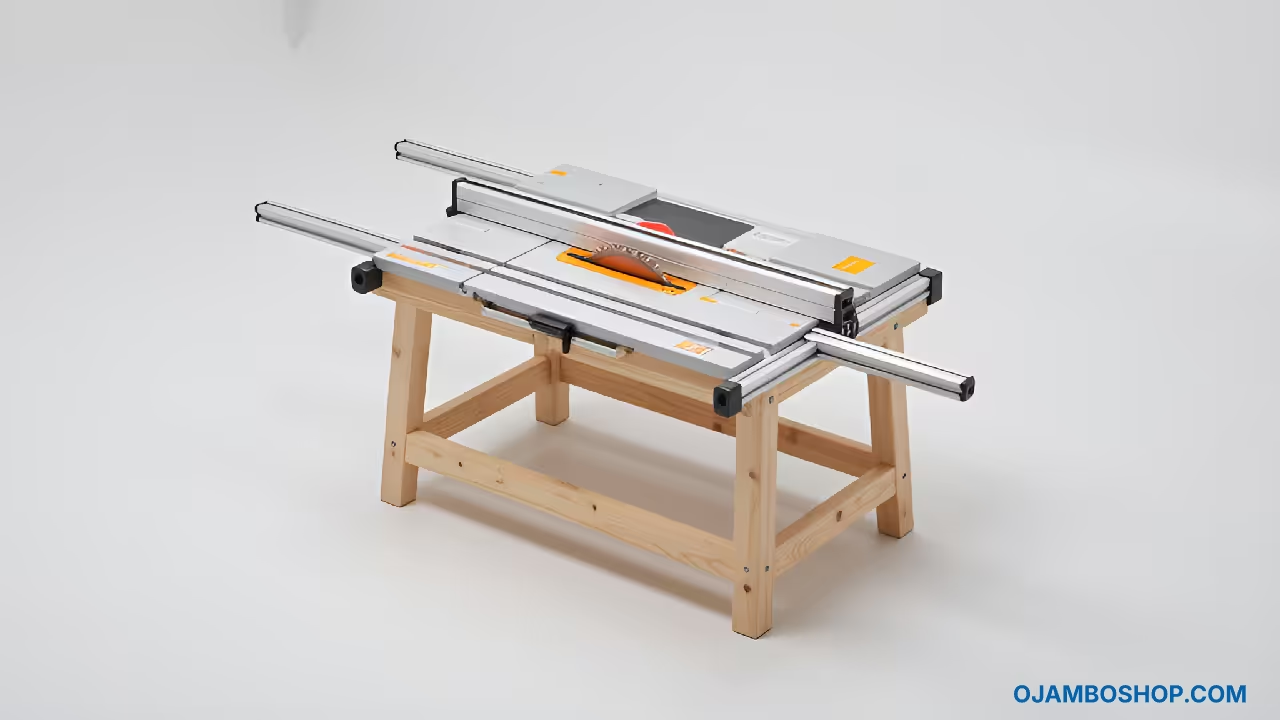
A high-performance workshop is defined by the efficiency of its most frequent operations. For most woodcarvers and carpenters, the miter saw is the primary tool used for crosscutting dimensional lumber and refining joinery. By building a dedicated Heavy-Duty Mobile Miter Saw Station, you transform a stationary tool into a high-capacity production hub.
This project focuses on providing massive material support while maintaining a compact footprint when not in use. The inclusion of folding extension wings allows you to support sixteen-foot boards with ease, ensuring safety and accuracy during the cut. This station is designed to be the heartbeat of your shop, offering portability that allows you to work in the driveway or reorganize your space at a moment’s notice.
Quick Specs
- Overall Dimensions: 30 inches Deep x 36 inches High x 120 inches Wide (Wings Extended)
- Estimated Material Cost: $250 – $400 USD (Depending on plywood grade)
- Difficulty Level: Intermediate
- Estimated Build Time: 12 to 16 hours (Weekend Project)
Materials and Tools
You will need high-quality materials to ensure this station survives the rigors of a professional shop environment. We recommend using Baltic Birch or cabinet-grade maple plywood for the main carcasses to minimize seasonal movement and warping. Standard construction-grade lumber can be used for internal bracing, but ensure it is kiln-dried to prevent the station from twisting over time.
Lumber and Sheet Goods:
– 3 Sheets of 3/4 inch Cabinet Grade Plywood
– 1 Sheet of 1/2 inch Sanded Plywood (For drawers)
– 4 Pieces of 2×4 x 8 foot Kiln-Dried Pine
– 2 Pieces of 4×4 x 8 foot Post (Optional for heavy-duty leg base)
Hardware:
– 4 Total 4-inch Heavy-Duty Locking Swivel Casters
– 2 Pairs of Heavy-Duty Folding Shelf Brackets (Rated for 200 lbs)
– 1 Box of 1-1/4 inch Pocket Hole Screws
– 1 Box of 2-1/2 inch Wood Screws
– 4 Drawer Slide Pairs (22-inch Full Extension)
– T-Track and Measuring Tape Inserts (Left and Right reading)
Required Tools:
– Table Saw or Track Saw
– Miter Saw (To be mounted)
– Drill and Impact Driver
– Pocket Hole Jig
– Digital Angle Finder
– 48-inch Level
– Orbital Sander
Hardware Comparison Table
| Hardware Item | Standard Option | Professional Upgrade | Benefit of Upgrade |
|---|---|---|---|
| Casters | 3-inch Rubber | 5-inch Polyurethane | Easier movement over shop debris |
| Drawer Slides | Roller Slides | Ball-Bearing Soft-Close | Prevents tools from shifting on closure |
| Wing Support | Wood Props | Steel Folding Brackets | Faster setup and higher weight capacity |
| Worktop | Plywood | Phenolic Faced Plywood | Reduced friction and glue-resistant surface |
Technical Layout
The structural integrity of the Heavy-Duty Mobile Miter Saw Station relies on a double-box carcass design. Unlike standard workbenches that use a simple frame and skin, this station utilizes a torsion-box inspired base to remain perfectly flat. The central cabinet is the primary load-bearing element, supporting the weight of the miter saw and the vibration generated during high-torque startup. Each side of the central cabinet features vertical bulkheads spaced eighteen inches apart to prevent the plywood from bowing under the weight of stored hardware.
The extension wings are attached using a continuous piano hinge or heavy-duty folding brackets that are bolted through the side panels. Because the wings must remain perfectly co-planar with the miter saw table, we employ an adjustable mounting system for the saw itself. This allows you to shim the saw up or down to account for different tool heights. Pro-Tip: When assembling the carcass, use a polyurethane construction adhesive in addition to your fasteners. Mechanical fasteners like screws can eventually loosen due to tool vibration, but a cured adhesive bond creates a monolithic structure that will remain rigid for decades.
Step-by-Step Instructions
Phase 1: Carcass Component Cutting
Begin by breaking down your 3/4 inch plywood sheets according to the cut list provided in the blueprint. Use a track saw for the long rips to ensure perfectly straight edges, as any deviation here will result in a wobbly station. Cut the top, bottom, and side panels for the central saw cabinet first, then move on to the flanking storage cabinets. Label every piece immediately with painter’s tape to avoid confusion during the assembly process.
Phase 2: Base Assembly and Caster Mounting
Assemble the base frames using the 2×4 lumber, ensuring all corners are perfectly square. This frame acts as the foundation for the entire unit and must be robust enough to handle the weight of the plywood and tools. Once the frame is built, skin the bottom with a layer of 3/4 inch plywood to create a solid mounting surface for the casters. Secure the heavy-duty locking casters to the four corners using lag bolts rather than standard wood screws.
Phase 3: Building the Main Cabinets
Construct the central cabinet and the two flanking storage units using pocket hole joinery and wood glue. The central cabinet must be recessed specifically to match the height of your miter saw’s deck. Measure your saw’s base height carefully and subtract that from the height of the side cabinets. Assemble the vertical bulkheads within the side cabinets to create the slots for your drawers and shelving units.
Phase 4: Constructing the Extension Wings
The extension wings are essentially smaller torsion boxes that provide a rigid, flat surface for long boards. Cut the top and bottom skins for the wings and sandwich a grid of internal plywood ribs between them. This construction method ensures the wings will not sag over time even when supporting heavy 4×4 timbers. Ensure the edges that will meet the main cabinet are cut perfectly square at 90 degrees.
Phase 5: Wing Attachment and Leveling
Mount the folding brackets or hinges to the side cabinets first, then attach the extension wings. This is a critical stage where you must use a long straightedge or a laser level to ensure the wings are flush with the cabinet tops. If the wings sit too low, use thin plastic shims between the bracket and the wing to bring them into alignment. Test the folding mechanism several times to ensure there is no binding against the main carcass.
Phase 6: Miter Saw Integration
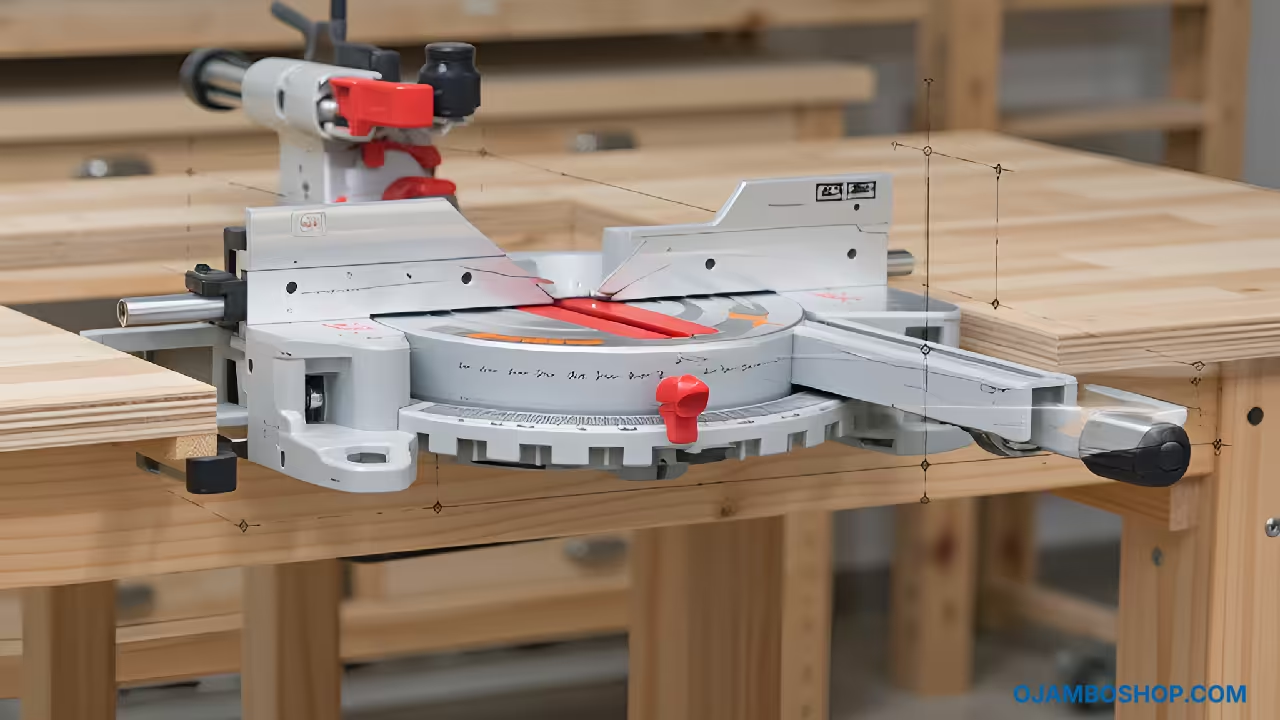
Place your miter saw into the recessed central bay and check for level against the side cabinets. Most saws will require a slight adjustment; you can achieve this by placing 1/4 inch hardboard or plastic spacers under the saw’s feet. Once the saw deck is perfectly flush with the side cabinets and wings, bolt the saw down through the plywood. This prevents the saw from shifting during use and maintains your calibration.
Phase 7: T-Track and Fence Installation
To maximize the utility of the station, install a sacrificial fence and a T-track system across the back of the cabinets and wings. Route a 3/4 inch wide groove along the entire length of the station, ensuring it is parallel to the miter saw fence. Install the aluminum T-track and screw it into place. This allows you to use flip-stops for repeatable, accurate cuts without having to measure every individual board.
Phase 8: Drawer Construction and Finishing
Build the drawer boxes using 1/2 inch plywood for the sides and 1/4 inch plywood for the bottoms. Install the full-extension drawer slides according to the manufacturer’s instructions, ensuring a 1/2 inch clearance on each side. Sand the entire unit starting with 80-grit sandpaper and working up to 150-grit. Apply a clear polyurethane finish or a heavy-duty paste wax to the work surfaces to protect against moisture and reduce friction.
Common Mistakes to Avoid
One of the most frequent errors is failing to account for the actual height of the miter saw deck during the planning phase. Every brand of saw has a different deck height, and a 1/8 inch discrepancy will lead to inaccurate cuts and dangerous board kickback. Always measure your specific saw twice before cutting the plywood for the central recess.
Another common mistake is choosing low-quality casters with plastic wheels. While they are cheaper, plastic wheels will develop flat spots over time if the station sits in one place for too long. This makes moving the station incredibly difficult and frustrating. Investing in polyurethane-coated wheels will ensure the station glides over sawdust and small wood chips effortlessly.
Builders often neglect to verify that their shop floor is level when calibrating the wings. If your floor has a significant slope, the station may rack slightly when moved to a different area. Always calibrate the wings relative to the main cabinet carcass using a precision straightedge rather than relying on a spirit level referenced from the floor.
Maintenance and Safety
To maintain the longevity of your Miter Saw Station, it is vital to keep the folding mechanisms and T-tracks free of debris. Use compressed air to blow out dust from the hinges and drawer slides weekly. If you live in a high-humidity environment, apply a coat of paste wax to all raw plywood edges to prevent moisture absorption which causes the wood to swell and bind.
Safety should always be your primary concern when operating a miter saw. Ensure that the locking casters are fully engaged before making any cuts to prevent the station from shifting. Always wear high-quality eye protection and hearing protection. Because this station creates a large surface area, it can collect a significant amount of dust; ensure your saw is connected to a high-volume dust extractor or shop vacuum to maintain air quality.
Periodically check all mechanical fasteners, especially the bolts holding the saw to the station and the screws in the folding brackets. The vibration from the motor and the impact of the blade hitting the wood can loosen these over time. A quick quarterly inspection and tightening will ensure your station remains a safe and reliable asset to your woodworking practice for many years.