Tag: woodworking plans

  • Stop Wasting Space This Ultimate Mobile Workbench With Integrated Table Saw Is The Only Build You Need

    Stop Wasting Space This Ultimate Mobile Workbench With Integrated Table Saw Is The Only Build You Need

    Creating a functional workspace in a small garage requires a strategic approach to tool organization and surface area utility. This mobile shop workbench serves as the central nervous system for your workshop by combining a massive assembly table with a dedicated housing for your table saw. By integrating your most used stationary tool into the bench itself the surrounding table surface acts as a natural outfeed support system for safer and more accurate cuts.

    This project is designed for the woodworker who needs professional results but must be able to park a car in the garage at the end of the day. The heavy duty locking casters allow you to glide the entire workstation into the center of the floor for large projects and tuck it against the wall when not in use. Beyond simple mobility the structural torsion box design ensures your work surface remains perfectly flat regardless of humidity changes or heavy load bearing pressure.

    Investing time into building a high quality workbench is the single most effective way to improve the quality of your finished woodworking projects. A stable flat and expansive surface allows for more precise joinery and easier assembly of large cabinetry or furniture pieces. This guide provides the technical roadmap to constructing a workstation that rivals professional industrial setups while remaining affordable for the home hobbyist.

    Please disable AdBlock to enable the download button.


    Quick Specs

    Dimensions: 72 Inches Length x 30 Inches Width x 34 Inches Height

    Estimated Cost: 180 to 260 USD depending on local lumber prices

    Difficulty Level: Intermediate Woodworking

    Estimated Build Time: 12 to 16 Hours


    Materials and Tools

    The integrity of your workbench depends entirely on the quality of your lumber and the strength of your fasteners. You will need six 2×4 kiln dried studs for the internal framing and two 4×8 sheets of 3/4 inch birch plywood for the top and bottom decks. For the saw housing you will need one 4×8 sheet of 1/2 inch plywood and four heavy duty 4 inch polyurethane locking casters rated for at least 300 pounds each.

    Your hardware list includes one box of 2.5 inch exterior wood screws and one box of 1.25 inch pocket hole screws for internal joinery. Do not forget a high quality waterproof wood glue which acts as a chemical weld to ensure the bench never racks or wobbles under lateral force. You will also need a set of 1/4 inch carriage bolts to secure the casters to the base frame.

    Required tools for this build include a miter saw for clean crosscuts and a circular saw with a straight edge guide for ripping down the plywood sheets. A drill driver set and a pocket hole jig are essential for the hidden joinery that keeps the frame rigid. You will also need a 4 foot level and a framing square to ensure every component is perfectly plumb and true during the assembly process.


    Technical Layout

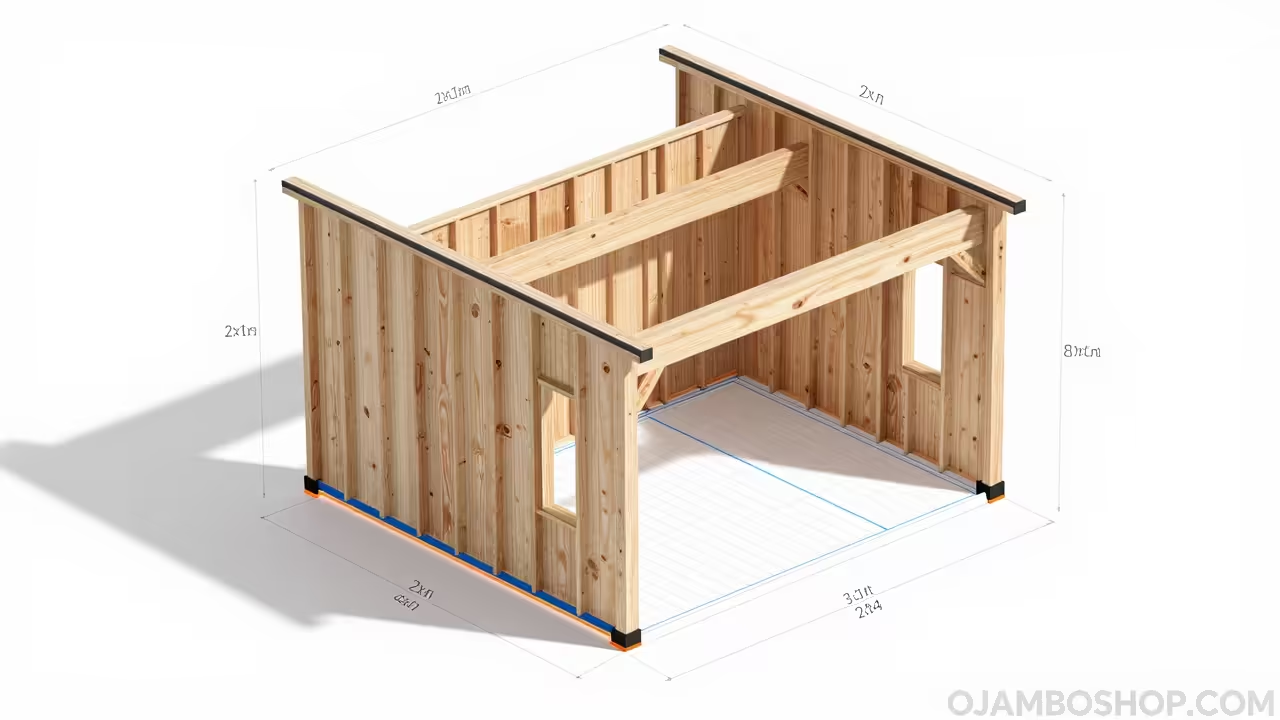
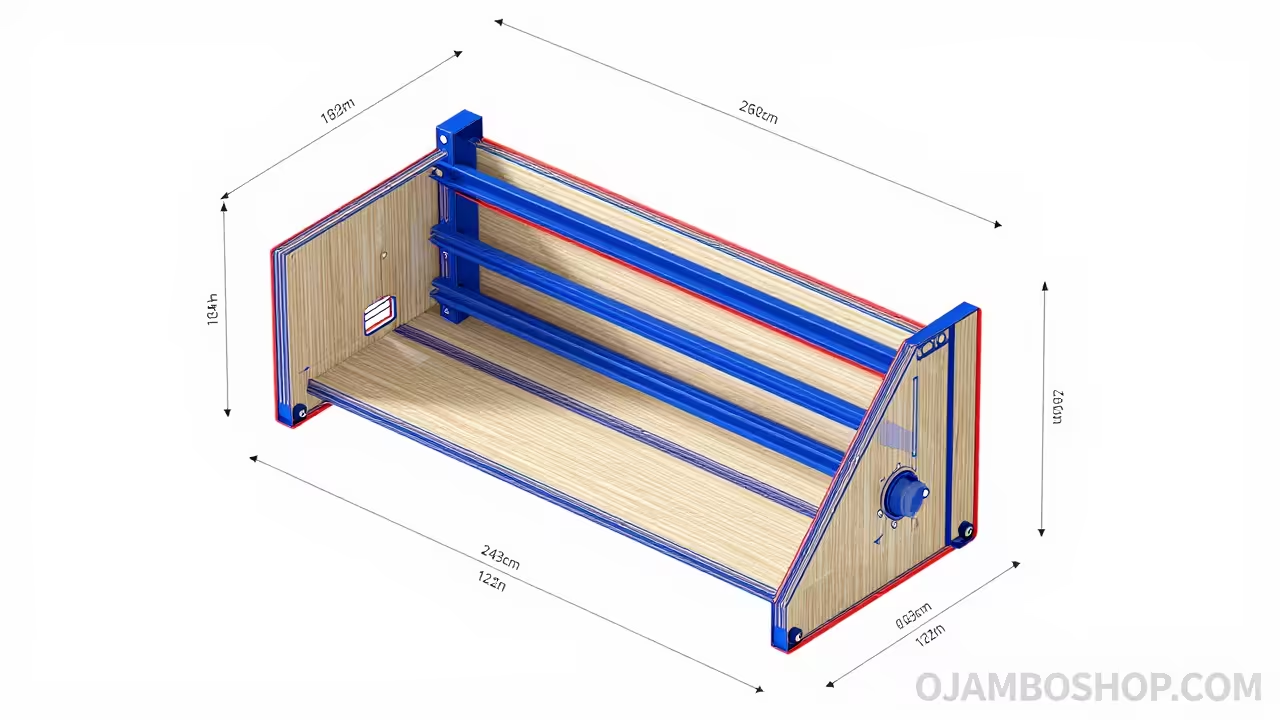
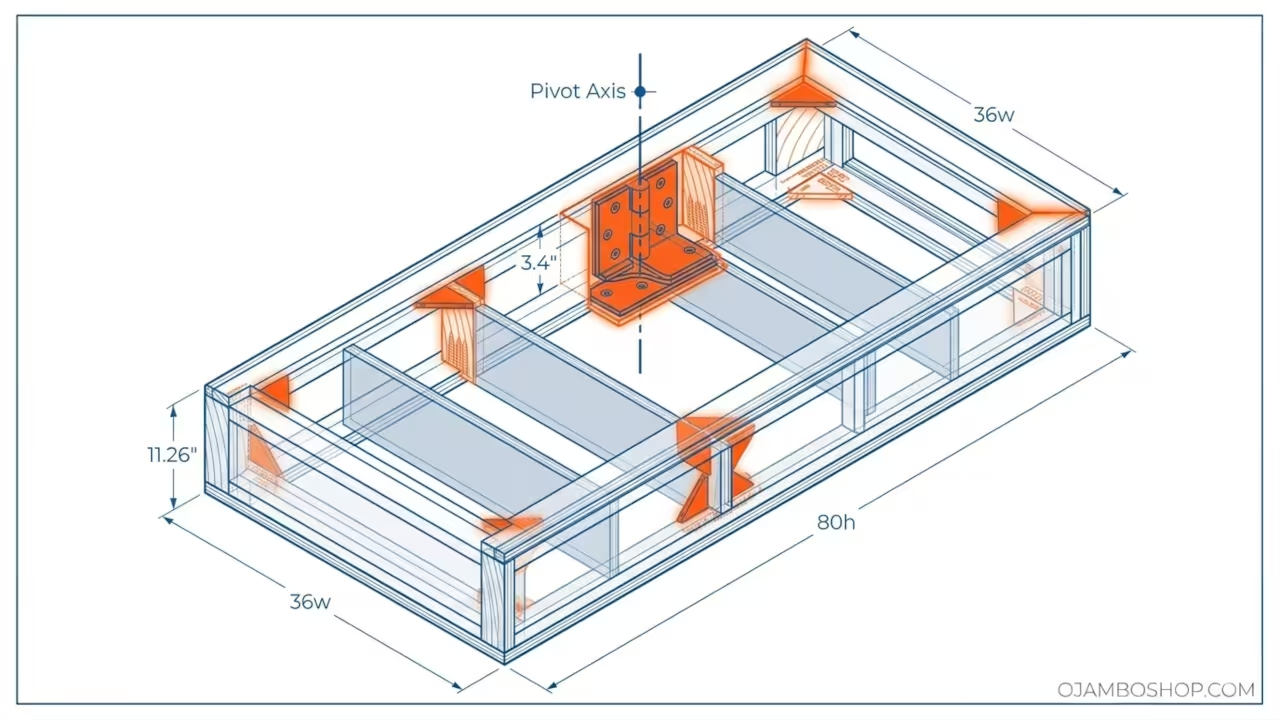
    The structural heart of this workbench is the modified torsion box frame which utilizes a series of interlocking 2×4 ribs to create an unyielding platform. Unlike standard framing where studs are simply nailed together this layout uses a grid pattern to distribute weight evenly across the entire footprint. This is especially critical because the table saw cutout creates a significant structural void in the center of the bench that must be reinforced with double headers.

    To maintain structural integrity while accommodating the saw the frame features a dropped shelf design that allows the saw table to sit perfectly flush with the plywood work surface. We achieve this by calculating the exact distance from the base of your specific saw to the top of its cast iron table and building a recessed cradle using 3/4 inch plywood supports. This cradle is tied directly into the primary 2×4 rafters of the bench to prevent any vibration or sagging during operation. This technical arrangement ensures that your workpieces slide seamlessly from the saw onto the outfeed table without catching on a lip or edge. It effectively doubles the usable surface area of your table saw without taking up any extra floor space in your workshop.


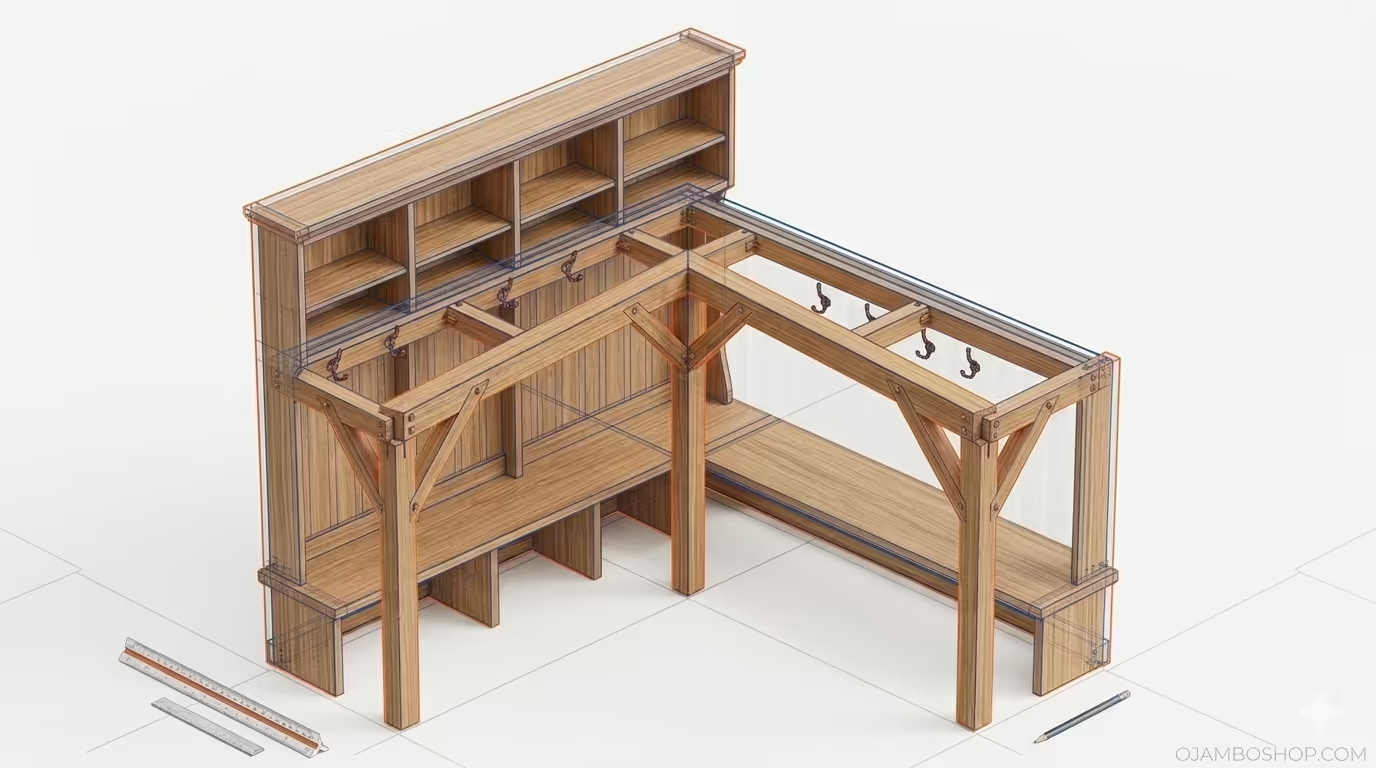
    Mobile Shop Workbench With Integrated Table Saw Stand Technical Framing Detail
    Mobile Shop Workbench With Integrated Table Saw Stand Structural Detail

    Step by Step Instructions

    Phase 1: Base Frame Construction

    Phase 1 starts with the construction of the base frame where you will cut four 72 inch rails and six 27 inch cross members. Lay these out on a flat floor and assemble the outer rectangle first using wood glue and two 3 inch screws per joint. Ensure the frame is square by measuring diagonally from corner to corner until both numbers are identical.

    Phase 2: Internal Ribs and Housing

    Phase 2 involves installing the internal ribs of the base frame while leaving a specific gap for the table saw cavity. Measure the width of your table saw plus one inch of clearance and position two internal headers to create the housing. Use a pocket hole jig to secure these internal members so they do not interfere with the plywood decking later on.

    Phase 3: Leg Assembly

    Phase 3 focuses on the leg assembly where you will create four L-shaped legs by joining two 2x4s together with glue and screws. This shape provides much higher resistance to racking than a single 4×4 post and allows for easier mounting of the internal shelves. Set the height of these legs by subtracting the thickness of your casters and the 3 inch top deck from your desired final height.


    Phase 4: Caster Installation

    Phase 4 is the installation of the heavy duty locking casters to the bottom of the base frame. Flip the frame over and pre-drill holes for the carriage bolts to avoid splitting the grain of the 2x4s. Use large washers on both sides of the bolt to distribute the pressure and tighten the nuts firmly with a socket wrench.

    Phase 5: Recessed Saw Cradle

    Phase 5 requires building the recessed saw cradle which is the most precise part of the entire project. Cut a plywood base that matches the footprint of your saw and secure it between the internal headers at the exact depth required for flush alignment. Pro-Tip: It is better to build the cradle 1/8 inch too deep and use metal shims to bring the saw up to level than to build it too shallow.

    Phase 6: Bottom Shelf Installation

    Phase 6 involves cutting and installing the bottom shelf which adds significant lateral stability to the entire structure. This shelf provides a massive amount of storage for heavy items like scrap wood or tool cases which also serves as ballast to keep the bench from moving. Secure the plywood to the base frame using 1.25 inch screws spaced every 8 inches along the perimeter.


    Phase 7: Plywood Top Deck

    Phase 7 is the preparation of the top work surface where you will rip your birch plywood to exactly 72 by 30 inches. Before securing it use your circular saw to cut the opening for the table saw to match the cradle built in Phase 5. Use a jigsaw to clean up the corners and ensure the saw can be dropped in easily without forcing the fit.

    Phase 8: Final Structural Assembly

    Phase 8 is the final assembly where you apply a generous bead of wood glue to the top of the wall studs and lay the plywood deck in place. Counter-sink your screws so the heads sit below the surface of the wood to prevent them from scratching your future workpieces. Use a flush trim router bit if necessary to ensure the plywood is perfectly aligned with the 2×4 frame edges.

    Phase 9: Table Saw Leveling

    Phase 9 covers the installation of the table saw and the final leveling of the surfaces. Place the saw in the cradle and use a long straight edge to verify that the saw table is on the same plane as the workbench. Adjust the shims under the saw feet until a spirit level shows a perfectly continuous line across both the saw and the wood.


    Phase 10: Sanding and Finishing

    Phase 10 is the finishing stage where you sand all exposed edges with 120 grit and then 220 grit sandpaper to prevent splinters. Apply a coat of paste wax to the plywood top and the saw table to allow wood to slide effortlessly during cuts. Do not use a film-building finish like polyurethane on the top as it can become sticky over time and interfere with work piece movement.

    Hardware Comparison Table

    Hardware Type Strength Rating Best Use Case Cost Factor
    Standard Wood Screws Medium General Framing Low
    Pocket Hole Screws High Hidden Joinery Medium
    Carriage Bolts Maximum Caster Attachment Medium
    Structural Lag Screws Maximum Main Headers High


    Common Mistakes

    The most frequent error builders make is forgetting to account for the actual height of the locking casters. If you measure your legs based on the wood alone the added 4 to 5 inches from the casters will result in a workbench that is uncomfortably tall for ergonomic tool use. Always measure your favorite stationary tool height first and work backwards from that specific number.

    Another mistake is failing to use enough wood glue on the torsion box joints which leads to a bench that develops a squeak or a wobble within six months. Screws provide the clamping pressure but the wood glue provides the actual structural bond that prevents the wood fibers from shifting under vibration. Apply glue to every mating surface without exception to ensure a lifetime of service.

    Failing to check for square during the assembly of the saw cradle can lead to a saw that sits crooked relative to the fence. If the saw is not perfectly parallel to the workbench edges your miter gauge and fence extensions will never be accurate. Use a precision square to verify the cradle is exactly 90 degrees to the front rail before the glue sets.


    Maintenance and Safety

    To maintain the structural integrity of your mobile workbench you should inspect the caster bolts every six months. The vibration from power tools and the movement across garage floors can loosen the nuts over time which leads to dangerous instability. Use blue thread-locking fluid on the bolt threads during initial assembly to provide an extra layer of vibration resistance.

    Moisture management is critical if your workshop is located in a high humidity area or an unheated garage. Plywood edges are particularly susceptible to swelling if they absorb ground moisture or spills. Sealing the exposed edges of the plywood with a thin layer of wood glue or a dedicated edge banding will significantly extend the life of your work surface.

    Safety gear should always be utilized when operating the integrated table saw especially when cutting large sheets that require the outfeed support. Ensure your riving knife is installed and that the power cord for the saw is managed through a dedicated port in the bench to prevent tripping hazards. Always lock all four casters before performing any cuts to ensure the bench remains stationary while the blade is in motion.


    Conclusion

    By following this professional layout you create a tool that grows with your shop and provides a stable foundation for every project that follows. The combination of heavy duty mobility and integrated stationary tool support makes this the most valuable asset in any modern DIY workshop. Investing in a mobile shop workbench is the best way to reclaim your garage space without sacrificing the precision of professional-grade tools.

    Please disable AdBlock to enable the download button.