Tag: Furniture Plans

  • How to Build a Custom Tiny House Storage Stairs System for Maximum Space Efficiency

    How to Build a Custom Tiny House Storage Stairs System for Maximum Space Efficiency

    How to Build a Custom Tiny House Storage Stairs System for Maximum Space Efficiency

    Maximizing vertical space is the primary challenge in any small living environment. A storage stairs system serves as both a functional staircase and a high-capacity cabinetry unit for your home.

    This project transforms the often-wasted space beneath a loft access point into a series of deep drawers and shelving. By integrating structural integrity with aesthetic appeal, you significantly increase the overall utility and resale value of a tiny property.

    Professional builders prioritize these dual-purpose structures because they eliminate the need for bulky independent dressers. When executed correctly, these stairs become the architectural centerpiece of a minimalist living space while providing essential organizational capacity.


    Please disable AdBlock to enable the download button.


    Quick Specs

    Dimensions: 96 inches long by 30 inches wide by 84 inches high.

    Estimated Cost: $450 to $700 depending on the selected wood species and hardware quality.

    Difficulty Level: Advanced Beginner to Intermediate.

    Estimated Build Time: 16 to 20 hours of active labor across three days.

    Materials and Tools

    The foundation of a lasting staircase is the quality of the lumber and the precision of the fasteners used during assembly. For this project, you will require high-quality cabinet-grade plywood and structural dimensional lumber to ensure the unit does not deflect under weight.


    Lumber and Sheet Goods:
    * Three sheets of 3/4 inch Birch or Maple plywood for the carcasses and treads.
    * Two sheets of 1/2 inch plywood for the drawer boxes and backing material.
    * Four 2×4 kiln-dried studs for internal structural framing and floor anchoring.
    * 10 linear feet of hardwood edge banding to match your plywood species.

    Hardware and Fasteners:
    * Five pairs of 24-inch heavy-duty soft-close drawer slides.
    * One box of 1-1/4 inch pocket hole screws for carcass joinery.
    * One box of 2-1/2 inch wood screws for structural frame attachment.
    * High-strength wood glue and 1-1/2 inch brad nails for trim work.

    Required Tools:
    * Table saw or track saw for ripping large plywood sheets accurately.
    * Miter saw for cross-cutting framing members and stair treads.
    * Pocket hole jig for creating strong, hidden internal joints.
    * Power drill and impact driver with assorted driver bits.
    * Pneumatic brad nailer and an air compressor for finishing.
    * Level, speed square, and a chalk line for layout marking.


    Technical Layout

    The engineering of storage stairs differs from traditional residential framing because each riser must act as a structural pier. In a standard staircase, the stringers carry the entire load, but in a storage system, the plywood carcasses provide the vertical support. Each “box” in the system is designed to transfer the downward force of a person’s weight directly to the subfloor through the vertical gables.

    To ensure the unit remains rigid under dynamic loads, we utilize a combination of pocket-hole joinery and a 1/2 inch inset back panel. The back panel is not merely aesthetic; it acts as a shear wall to prevent the cabinetry from racking or leaning over time. Each step is calculated with a standard 10-inch run and an 8-inch to 10-inch rise to remain comfortable for daily use. We reinforce the leading edge of every tread with a solid wood nosing to prevent the plywood layers from delaminating under heavy foot traffic.


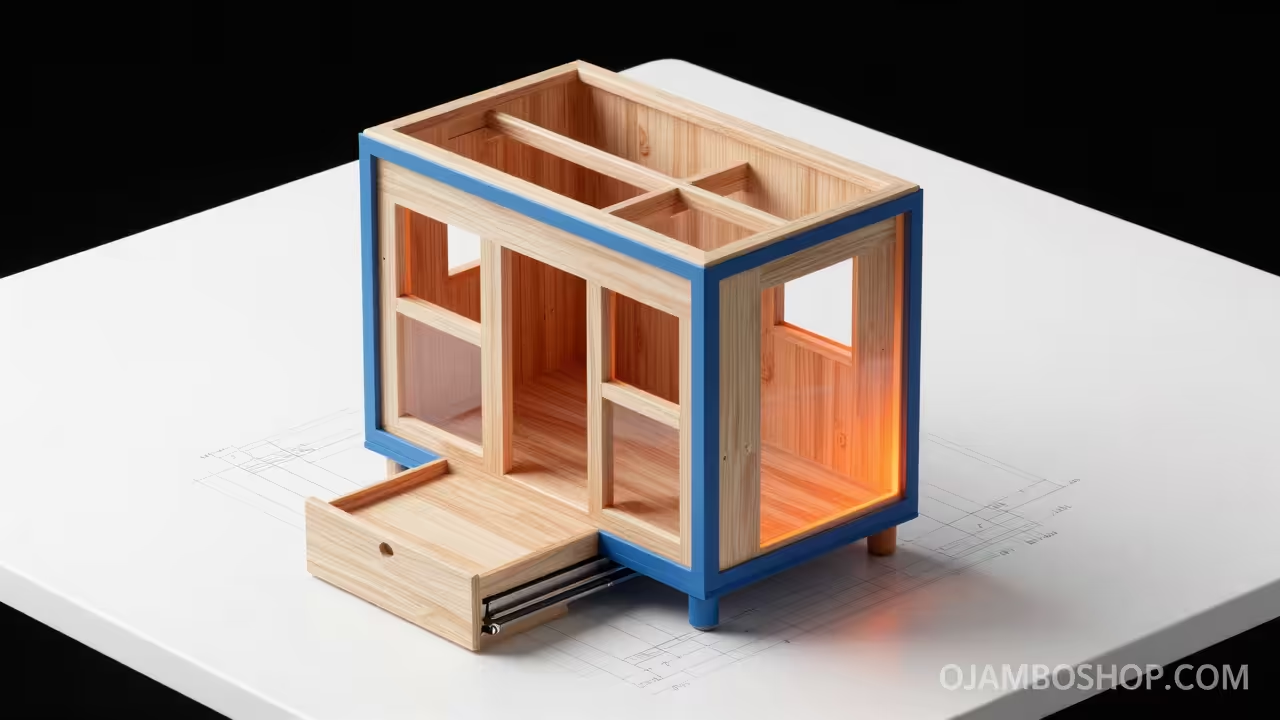
    Custom Tiny House Storage Stairs Technical Framing Detail
    Custom Tiny House Storage Stairs Structural Detail

    Step-by-Step Instructions

    Phase 1: Subfloor Preparation and Layout

    Begin by marking the footprint of the stairs on your floor and wall using a chalk line and a long level. Ensure the floor is perfectly level before beginning, as even a slight slope will cause the drawer slides to bind or roll open. If the floor is uneven, you must construct a level 2×4 base frame that is shimmed and anchored to the subfloor. Use a framing square to ensure the corner where the stairs meet the wall is exactly ninety degrees.

    Phase 2: Cutting the Plywood Carcasses

    Rip your 3/4 inch plywood sheets into 30-inch wide strips to match the total width of the staircase system. From these strips, cut the vertical gables for each step, decreasing the height of each subsequent piece by your calculated riser height. Label each piece clearly with its position in the assembly to avoid confusion during the complex joinery process. Precise cuts at this stage are critical for ensuring that the finished staircase is safe and visually aligned.


    Phase 3: Assembly of the Main Carcass Boxes

    Use a pocket hole jig to drill holes into the top and bottom horizontal stretchers of each stair module. Apply a generous bead of wood glue to every joint before driving the 1-1/4 inch screws to create a permanent bond. Assemble each step as an independent box, checking for squareness constantly with your speed square as you tighten the fasteners. Once the boxes are built, stack them in their final configuration to verify that the overall height and slope are correct.

    Phase 4: Installing the Structural Backing

    Cut pieces of 1/2 inch plywood to fit the back of each cabinet module, ensuring they are perfectly square to provide shear strength. Secure these panels using wood glue and 1-inch staples or brad nails spaced every six inches along the perimeter. This backing prevents the stairs from wobbling laterally when a person climbs to the top loft level. For the sections that will remain open shelving, you may choose to finish the back panels with a decorative veneer or paint.

    Phase 5: Building the Drawer Boxes

    Construct the drawer boxes using 1/2 inch plywood for the sides and 1/4 inch plywood for the captured bottom panels. The drawers should be exactly 1 inch narrower than the internal cabinet opening to accommodate standard 1/2 inch side-mount drawer slides. Use simple butt joints reinforced with glue and nails, or upgrade to drawer-lock router bits for a more professional finish. Sand the top edges of the drawer boxes smooth to prevent snagging on clothing or stored items.


    Phase 6: Mounting the Heavy-Duty Slides

    Install the drawer slides by marking a level line on the inside of the cabinet gables at the desired height. Use a dedicated drawer slide jig to ensure the left and right tracks are perfectly parallel and aligned with the front face. Secure the corresponding members to the drawer boxes, ensuring they sit flush and operate without resistance. Test the motion of each drawer multiple times to ensure the soft-close mechanism engages properly and the drawer sits level.

    Phase 7: Installing Treads and Risers

    Cut the 3/4 inch plywood treads so they overhang the front of the cabinet by approximately 1 inch to create a traditional look. Apply wood glue to the top edges of the cabinet carcasses before laying the treads and securing them with finish nails. For the risers, you can use thin 1/4 inch plywood or the drawer fronts themselves to create a seamless vertical appearance. Ensure all fasteners are countersunk so they can be filled with wood putty later in the finishing process.

    Phase 8: Edge Banding and Sanding

    Apply iron-on hardwood edge banding to all exposed plywood edges to give the project the appearance of solid timber furniture. Use a sharp chisel or a dedicated edge banding trimmer to remove the excess material for a flush, professional finish. Sand the entire unit starting with 120-grit sandpaper and progressing to 220-grit for a smooth surface ready for stain or paint. Pay close attention to the corners of the treads, rounding them slightly to prevent sharp edges from causing injury.


    Phase 9: Final Finishing and Sealing

    Vacuum all dust from the unit and wipe it down with a tack cloth to ensure a clean surface for the topcoat. Apply at least three coats of high-traffic polyurethane or floor-grade sealer to the stair treads, as they will endure significant wear. For the cabinet faces and drawer fronts, a matching stain or a durable enamel paint will provide a cohesive look with the rest of the home. Allow the finish to cure for at least 48 hours before walking on the stairs or installing the drawer hardware.

    Common Mistakes

    The most frequent error in tiny house stair construction is failing to account for the thickness of the treads when calculating the first and last step height. If you do not subtract the tread thickness from the bottom riser, the first step will be too high, creating a significant tripping hazard. Always double-check your rise and run math against local building codes, even if you are building for a mobile or non-traditional structure.

    Another common mistake is choosing low-quality drawer slides that cannot handle the weight of heavy storage or the vibrations of a moving tiny house. Using slides rated for at least 100 pounds ensures that the drawers stay closed during transit and do not sag over time. Many builders also forget to leave a small expansion gap between the stairs and the adjacent walls, which can lead to squeaking as the house shifts.


    Finally, many DIY enthusiasts skip the wood glue, relying solely on mechanical fasteners to hold the structure together under load. In a small living environment, the constant movement of people on the stairs will eventually loosen screws if they are not reinforced with glue. A glued and screwed joint is significantly stronger and will remain silent and sturdy for the life of the home.

    Maintenance and Safety

    Pro-Tip: When building stairs for small living spaces, structural integrity depends heavily on the moisture content of your lumber. Always use kiln-dried wood and apply a moisture barrier or high-quality sealant to all sides of the plywood, including the undersides. This prevents the wood from warping due to the humidity fluctuations common in small, tightly-sealed homes, ensuring your drawers never bind.


    Material Type Pros Cons Best Use
    Birch Plywood Excellent strength, beautiful grain, takes stain well. More expensive than construction grade. Main carcasses and visible treads.
    MDF Core Extremely flat, very easy to paint, cost-effective. Heavy, poor moisture resistance, holds screws poorly. Internal partitions or painted drawer fronts.
    CDX Plywood Very cheap, structurally sound for hidden parts. Rough surface, prone to splinters and voids. Hidden structural framing only.
    Solid Hardwood Most durable, highest aesthetic value, can be refinished. Very expensive, prone to seasonal expansion. Tread nosing and decorative trim.


    To maintain your stairs, inspect the drawer slides once a year and tighten any screws that may have vibrated loose from use. Clean the treads with a damp cloth and avoid using wax-based cleaners which can make the steps dangerously slippery. If you notice any squeaking, you can usually resolve it by injecting a small amount of wood glue into the joint or adding a decorative trim piece to further stiffen the assembly. Always wear a dust mask and eye protection when cutting plywood, as the glues used in manufacturing can release irritating particulates during the sanding process.


    Please disable AdBlock to enable the download button.