Introduction
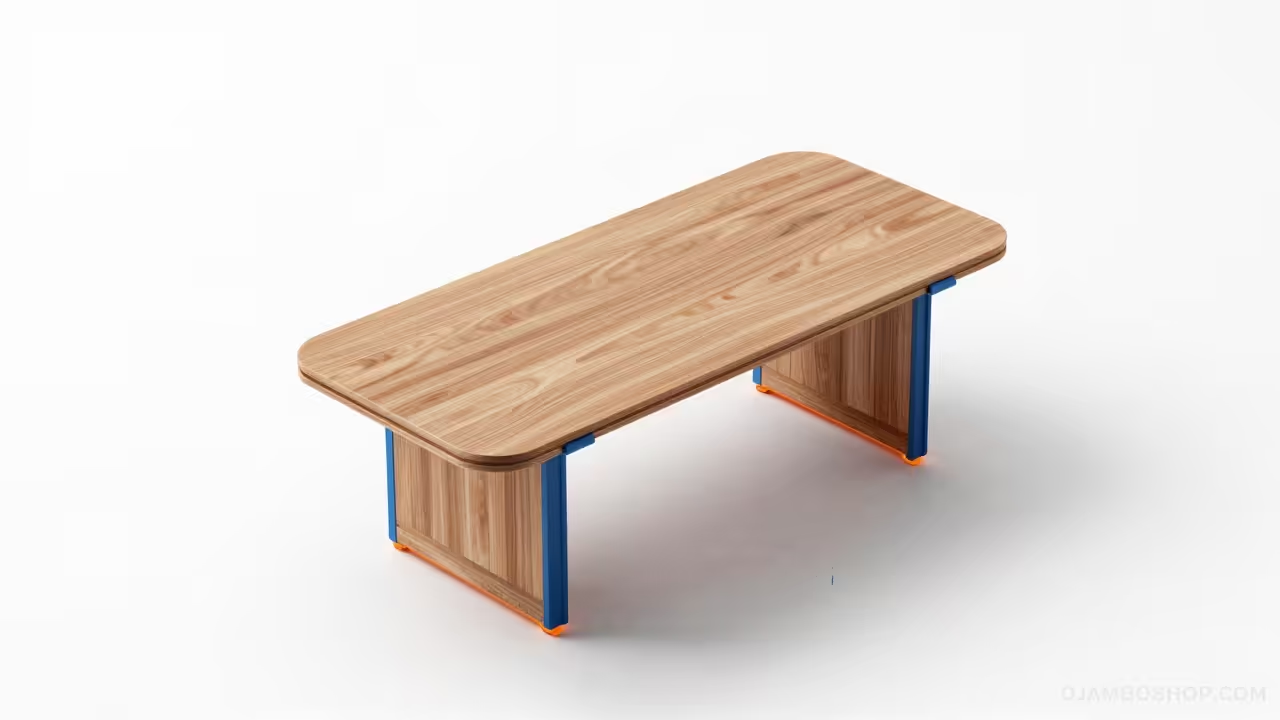
The modern farmhouse dining table serves as the definitive anchor for the contemporary home interior. It bridges the gap between rugged structural integrity and the refined elegance required for high-end interior design.
Building your own furniture provides a level of customization that retail outlets simply cannot match for the price point. This specific X-base design offers superior legroom and a timeless silhouette that complements both rustic and modern decor styles.
Investing your time into a piece of this magnitude increases the functional value of your dining space significantly. Beyond the aesthetic appeal, a handmade solid wood table becomes a generational heirloom that withstands the rigors of daily family use.
Quick Specs
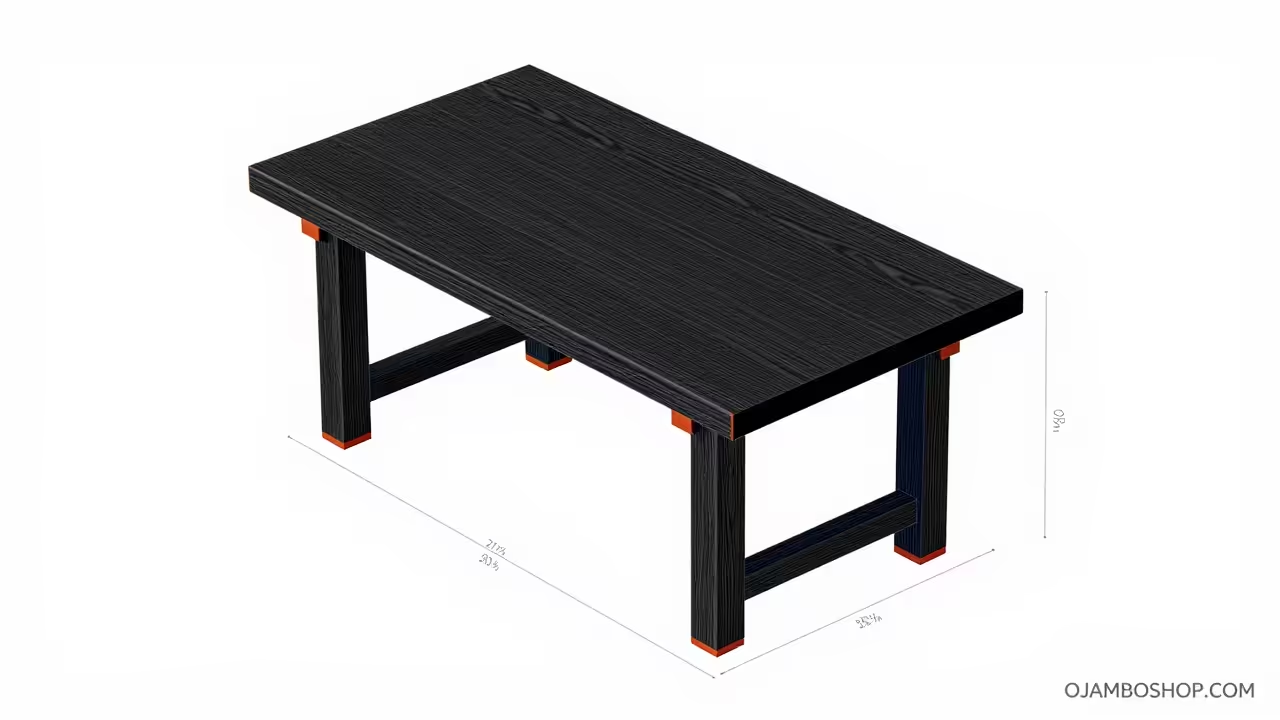
Dimensions: 84 inches long by 40 inches wide by 30 inches tall. Estimated Cost: $250 to $450 depending on lumber species selection. Difficulty Level: Intermediate due to compound miter cuts and large-scale assembly. Estimated Build Time: 12 to 16 hours plus drying time for finishing.
Materials and Tools
| Material Type | Specification | Quantity |
|---|---|---|
| Tabletop Planks | 2×10 x 8ft Douglas Fir or Oak | 5 Boards |
| Breadboard Ends | 2×10 x 8ft Matching Species | 1 Board |
| X-Base Legs | 4×4 x 8ft Kiln Dried Posts | 3 Posts |
| Top Support Rails | 2×4 x 8ft Framing Lumber | 2 Boards |
| Center Stretcher | 4×4 x 8ft Matching Post | 1 Post |
| Fasteners | 2.5 inch Kreg Blue-Kote Screws | 1 Box |
| Table Connectors | Heavy Duty Figure-Eight Fasteners | 10 Pack |
Required Tools: Miter saw with high-tooth count blade, Table saw for ripping factory edges, Kreg pocket hole jig and 2.5-inch screws, Random orbital sander with various grits, Power drill and impact driver, Long pipe clamps or parallel clamps, Speed square and digital protractor, Wood glue (Titebond II or III).
Technical Layout
The structural integrity of an X-base dining table relies entirely on the geometry of the leg assemblies and the center stretcher. Unlike standard four-legged tables, the X-design creates a series of triangles that naturally resist lateral racking and swaying. The primary load is transferred from the tabletop through the upper mounting plates and into the intersecting 4×4 posts. These posts must be notched or half-lapped at their center point to create a flush, interlocking joint that maintains the thickness of the timber.
A critical component of this layout is the heavy-duty center stretcher that connects the two X-frames. This horizontal member prevents the legs from spreading outward over time under the substantial weight of a solid wood top. We utilize deep pocket screws or decorative through-bolts to ensure this connection remains rigid during seasonal wood movement. By using kiln-dried 4×4 material, we minimize the risk of the timber twisting as it acclimates to the indoor humidity levels of your home. The resulting frame provides a massive, stable footprint that can support several hundred pounds without flexing or bowing.
Pro-Tip: When building large-scale dining surfaces, the choice of fasteners determines the long-term viability of the piece. Standard wood screws driven directly through the base into the top will eventually cause the wood to split because they do not allow for lateral expansion. Always use “Figure-Eight” steel fasteners or Z-clips which are designed to pivot slightly within a shallow Forstner bit recess. This allows the tabletop to expand and contract across its width during seasonal humidity changes without cracking the breadboard joints or the main planks.

Step-by-Step Instructions
Phase 1: Preparing the Tabletop Planks
Begin by selecting the straightest 2×10 boards available at your local lumber yard to minimize planing work later. Use a table saw to rip approximately 1/4 inch off each long edge to remove the rounded factory corners. This process ensures that your glue joints are perfectly square and tight, resulting in a seamless tabletop surface. Cross-cut your five main planks to a length of 74 inches, leaving room for the breadboard ends to be added later. Inspect each board for knots or sap pockets that might weep through the finish over time.
Phase 2: Panel Glue-Up and Clamping
Lay your prepared planks on a flat work surface and arrange them to showcase the most attractive grain patterns. Apply a generous bead of high-quality wood glue to the meeting edges and use pipe clamps to pull the boards together. Ensure the planks remain flush across the top surface by using wood cauls or sacrificial clamping scraps to apply downward pressure. Wipe away any excess glue with a damp cloth immediately to prevent staining issues during the final finishing stages. Let the assembly cure for a minimum of twenty-four hours in a temperature-controlled environment before removing the clamps.
Phase 3: Attaching Breadboard Ends
Breadboard ends are essential for preventing the wide tabletop from warping or cupping as the seasons change throughout the year. Cut two 2×10 pieces to a length of 40 inches to match the total width of your glued-up panel. Use a pocket hole jig to drill holes on the underside of the main tabletop planks every six inches across the width. Attach the breadboard ends using glue only in the center two inches to allow the outer edges to expand. Use specialized breadboard screws with elongated holes if you prefer a more traditional mechanical joinery method over pocket screws.
Phase 4: Cutting the X-Base Leg Members
The X-base requires four identical 4×4 segments cut at 45-degree angles on both ends to form the primary cross shape. Use a miter saw to execute these cuts precisely, ensuring that the long-to-long measurement of each piece is 34 inches. Lay two pieces over each other to visualize the intersection and mark the center point for the half-lap joint. This layout is the most time-consuming part of the build because accuracy here determines if the table sits level. Check your miter saw calibration before making these cuts to ensure the 45-degree angle is absolutely perfect.
Phase 5: Executing the Half-Lap Joints
Set your circular saw or miter saw blade depth to exactly half the thickness of your 4×4 material, which is typically 1.75 inches. Make multiple relief cuts between your center marks and clear out the waste material using a sharp wood chisel. Test the fit of the two boards frequently until they slide together with a snug, friction-fit connection. Repeat this process for the second leg assembly to ensure both ends of the table are identical in height. Sand the interior of the notches to remove any high spots that might prevent the joint from closing fully.
Phase 6: Assembling the Leg Bases
Once the half-lap joints are perfected, apply wood glue to the interior faces of the notch and clamp the X-assembly together. Drive four 2.5-inch wood screws through the back of the joint to provide mechanical reinforcement while the glue sets. Measure and cut the top and bottom horizontal 2×4 plates that will serve as the mounting surface for the table. Screw these plates into the top and bottom of the X-frame, ensuring they are perfectly centered and level. Use a framing square to verify that the X-assembly is perpendicular to the floor plates during this assembly.
Phase 7: Installing the Center Stretcher
The center stretcher acts as the spine of the table base and must be cut to fit tightly between the two X-frames. Measure the distance between your assembled legs based on your desired overhang, typically leaving 12 inches of space at each end. Use long timber screws or lag bolts to secure the stretcher through the center point of the X-joints on both sides. Ensure the stretcher is perfectly level so that it does not pull the legs inward and cause the table to rock. Use a 1/2-inch drill bit to create a deep counterbore for the bolt heads so they remain hidden.
Phase 8: Mounting the Top to the Base
Flip your completed tabletop upside down on a soft surface to prevent scratching the finished face during the mounting process. Center the completed leg assembly on the underside of the table and mark the locations for the mounting screws. Drill oversized pilot holes through the top 2×4 plates to allow for the natural expansion and contraction of the wood. Drive 3-inch lag screws with washers through the plates and into the tabletop, being careful not to drill through the surface. Tighten the screws until they are snug but do not over-torque them to avoid stripping the wood fibers.
Phase 9: Sanding and Surface Preparation
Sanding is the most important step for achieving a professional finish that feels smooth to the touch for dinner guests. Start with 80-grit sandpaper to level any minor unevenness between the boards and remove any remaining mill marks. Progress through 120-grit, 150-grit, and finally 220-grit sandpaper until the entire surface feels like polished stone. Vacuum the table thoroughly and use a tack cloth to remove every microscopic particle of dust before applying your chosen stain. Inspect the surface under a bright raking light to find any hidden scratches that need further attention.
Phase 10: Finishing and Sealing
Apply a pre-stain wood conditioner to the Douglas Fir to ensure the pigment absorbs evenly without any unsightly blotching or streaks. Follow the conditioner with a heavy coat of oil-based stain in a classic walnut or weathered gray tone for that farmhouse look. Once the stain is completely dry, apply at least three coats of polyurethane or furniture wax to protect against water spills. Lightly sand with 320-grit paper between coats of sealer to maintain a glass-smooth texture across the entire tabletop. Allow the final coat to cure for at least seventy-two hours before placing heavy items on the surface.
Common Mistakes
One frequent error is failing to account for wood movement when attaching the tabletop to the heavy X-base frame. If you screw the top down too tightly without oversized holes, the wood will eventually crack or split as humidity levels fluctuate. This is why the figure-eight fasteners mentioned in the technical section are superior to standard direct-drive screws.
Another mistake involves poor selection of lumber, specifically using wet construction-grade timber that has not been properly acclimated to an indoor environment. This leads to the X-joints opening up or the tabletop planks pulling apart within the first few months of use. Always check the moisture content of your lumber or let it sit in your garage for two weeks before starting.
Builders often rush the sanding process, leaving behind visible swirl marks from the orbital sander that only appear after the stain is applied. Taking the extra hour to progress through every grit level ensures the final product looks like high-end furniture rather than a rough DIY project. Wipe the surface with mineral spirits before staining to see exactly how the finish will look on the raw wood.
Failure to properly support the center stretcher is a common structural oversight that leads to a wobbly table. If the stretcher is not perfectly centered and secured with heavy-duty lag bolts, the legs will eventually begin to flare outward. This movement stresses the half-lap joints in the X-base and can eventually lead to a total structural failure of the table legs.
Maintenance and Safety
Always wear a high-quality dust mask and eye protection when cutting 4×4 timbers and sanding large surface areas for extended periods. The fine dust from Douglas Fir or Oak can irritate the respiratory system and cause long-term health issues if inhaled regularly. Ensure your workspace is well-ventilated when applying oil-based stains and polyurethane sealers to avoid inhaling harmful VOC fumes.
To maintain the finish of your modern farmhouse table, clean the surface only with a damp microfiber cloth and mild soap. Avoid using harsh chemical cleaners or wax polishes containing silicone, as these can degrade the protective polyurethane layer over time. Use coasters for hot beverages and placemats for heavy plates to prevent heat rings or deep scratches in the top coat.
Every twelve months, inspect the lag bolts connecting the stretcher and the base to ensure they have not loosened from regular use. Re-tightening these fasteners will maintain the structural integrity and prevent the table from developing any annoying wobbles or squeaks. If the wood begins to look dry or dull, a fresh coat of high-quality paste wax can restore the luster without a full strip-and-refinish.