
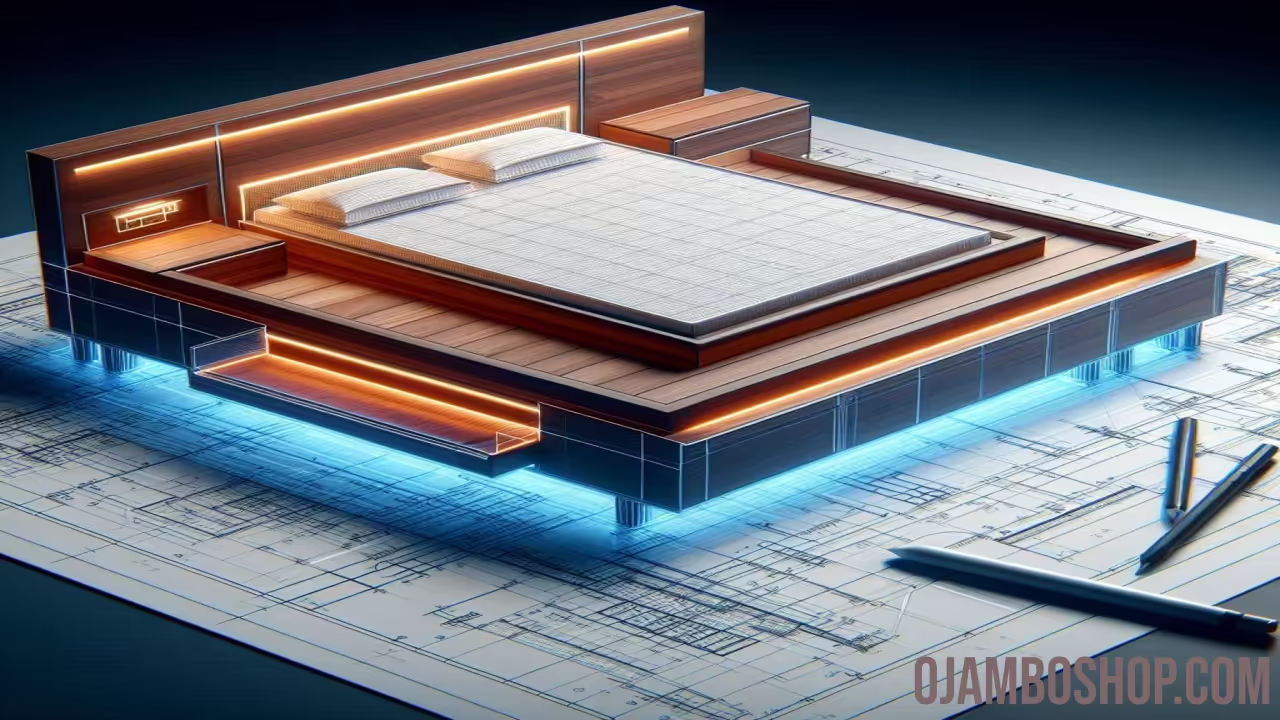
The modern bedroom is no longer just a place for sleep but a sanctuary of design and personal expression. By building a custom floating platform bed, you elevate the aesthetic of your room while maximizing the perceived floor space. This project combines structural engineering with high-end interior design to create a centerpiece that feels weightless and sophisticated.
Beyond the visual appeal, a floating bed eliminates the clutter of traditional legs and provides a cleaner environment for maintenance. The integrated LED lighting system adds a layer of safety and ambiance that standard furniture simply cannot provide. This build is a significant investment in your home value and your daily comfort level.
For this project, we are focusing on a standard King-sized footprint to ensure maximum impact and utility. The design utilizes a recessed pedestal base to create the floating illusion without compromising the structural stability of the unit. We will use a combination of structural SPF lumber and high-grade walnut or oak for the visible exterior cladding.
Quick Specs
Dimensions: 80 inches wide by 84 inches long by 14 inches high
Estimated Cost: $450 to $700 depending on wood species selection
Difficulty Level: Intermediate to Advanced
Estimated Build Time: 12 to 16 hours over two weekends
Materials and Tools
For the internal frame, you will need eight 2×6 boards at 8 feet long and four 2×4 boards at 8 feet long. The exterior aesthetic finish requires four 1×10 hardwood boards at 8 feet long and matching edge banding for the plywood deck. The sleeping surface is constructed from two sheets of 3/4-inch cabinet-grade plywood to ensure a perfectly flat and rigid support system.
Hardware requirements include 3-inch deck screws for the primary frame and 1.5-inch pocket hole screws for the exterior mitered corners. You will also need a high-quality RGB-W LED strip kit with a minimum length of 16 feet to wrap the pedestal. Ensure the lighting kit includes a diffused channel to prevent “hot spots” where individual LED diodes are visible on the floor.
Essential tools for this build include a miter saw for precise cross-cuts and a table saw for ripping the hardwood cladding to width. A pocket-hole jig is necessary for the joinery of the exterior frame to keep fasteners hidden from view. You should also have a cordless drill, an impact driver, a circular saw with a straight-edge guide, and a random orbital sander.
Technical Layout

The structural integrity of a floating bed relies entirely on the cantilever principle and the weight distribution of the inner pedestal. For a King-sized platform, the pedestal must be recessed exactly 10 to 12 inches from the outer edge of the upper frame. This specific offset creates the visual illusion of suspension while keeping the center of gravity stable when a person sits on the edge.
The upper frame is a torsion-box style grid made of 2×6 lumber, which prevents the plywood deck from sagging over time. We utilize a series of five lateral joists spaced 16 inches on center, mimicking standard residential floor framing. This ensures that the mattress weight is transferred vertically through the pedestal rather than putting stress on the cantilevered overhangs.
Pro-Tip: When assembling the pedestal, use a bead of high-quality construction adhesive between every wood-to-wood contact point. This prevents the wood from rubbing against the fasteners during movement, which is the primary cause of bed squeaks and groans. Using 3-inch GRK structural screws instead of standard drywall screws will also ensure the frame never pulls apart under dynamic loads.
Step-by-Step Instructions
Step 1: Pedestal Construction
Start by cutting four 2×6 boards to 56 inches and four boards to 60 inches to form the rectangular base. Assemble two identical rectangular frames using 3-inch screws and wood glue to ensure a rigid foundation. Stack these two frames on top of one another to achieve a total pedestal height of 11 inches.
Check for square by measuring the diagonals; both measurements must be identical to within 1/16 of an inch. Secure the two frames together with vertical 2×4 blocking in each corner for added compression strength. This pedestal will serve as the anchor for the entire bed, so it must be perfectly level on your workshop floor.
Step 2: Main Platform Framing
The main platform frame consists of an outer perimeter of 2×6 lumber measuring 76 inches wide by 80 inches long. Within this perimeter, install your five internal joists at 16-inch intervals to provide a flat surface for the plywood. Use a pocket hole jig on the ends of the internal joists to hide the fasteners from the outside face.
Check the frame for squareness once more before driving the final screws to ensure the mattress fits perfectly later. It is helpful to pre-drill all holes to prevent the SPF lumber from splitting near the end grain. Lay the frame on the ground and verify that there is no racking or twisting in the long spans.
Step 3: Integrating the Pedestal and Frame
Flip the main platform frame upside down and center the pedestal on top of the joist system. Ensure the pedestal is positioned 10 inches from the sides and 12 inches from the foot of the bed. This rear-heavy positioning allows for better support near the headboard where the majority of the weight resides.
Drive 4-inch lag bolts through the pedestal into the main frame joists at every intersection point. Use a minimum of eight bolts to ensure the connection is permanent and can handle the leverage of the overhang. Once secured, flip the entire assembly right-side up to verify that the floating effect is visually consistent.
Step 4: Installing the Plywood Deck
Cut your two sheets of 3/4-inch plywood to fit the 76-inch by 80-inch dimensions of the upper frame. Apply a bead of wood glue to the tops of all joists before laying the plywood sheets in place. Use 1.5-inch wood screws spaced every 12 inches along the joists to secure the decking to the frame.
Countersink the screws slightly below the surface so they do not snag the mattress or bedding materials. If your plywood sheets have a “good” side, ensure that side is facing upward for a cleaner finish. Sand the edges of the plywood flush with the 2×6 frame using 80-grit sandpaper on an orbital sander.
Step 5: Exterior Hardwood Cladding
The cladding is what transforms the utility frame into a piece of high-end furniture for your home. Cut your 1×10 hardwood boards to length with 45-degree mitered corners at the foot of the bed. The boards should sit roughly 1 inch higher than the plywood deck to create a “lip” that holds the mattress.
Attach the cladding to the 2×6 frame using wood glue and 1.5-inch pocket screws from the inside of the frame. This ensures that no nail holes or screw heads are visible on the beautiful hardwood exterior. Take your time to align the miters perfectly at the corners for a professional, seamless appearance.
Step 6: Electrical and LED Channel
Before finishing the wood, install the aluminum LED channels along the bottom perimeter of the upper frame. Position the channels approximately 2 inches back from the edge of the cladding to hide the hardware. Drill a small 1/2-inch hole through the platform near the head of the bed to route the power cables.
Mount the LED controller inside the pedestal area where it is hidden but still accessible for maintenance. Use clear silicone or mounting clips to ensure the LED strips remain flat and secure within the channels. Test the lighting system now to ensure all connections are working before the final assembly of the room.
Step 7: Sanding and Surface Prep
Begin the sanding process with 120-grit sandpaper to remove any mill marks or construction grime from the wood. Progress to 150-grit and finally 220-grit for a smooth, professional-grade surface that is ready for finishing. Pay special attention to the mitered corners to ensure they feel soft to the touch and perfectly flush.
Vacuum all dust from the wood pores and wipe the entire surface down with a tack cloth or mineral spirits. This step is critical because any leftover sawdust will create a gritty texture once the clear coat is applied. Check the wood for any natural defects or knots that might require a small amount of wood filler.
Step 8: Finishing and Sealing
Apply a high-quality polyurethane or hard-wax oil to the hardwood cladding and any visible parts of the pedestal. Hard-wax oils are excellent for this project because they are easy to repair and provide a matte, modern look. Apply at least two coats, sanding lightly with 320-grit paper between applications for maximum smoothness.
Allow the finish to cure for at least 48 hours before placing a mattress on the platform to avoid sticking. Ensure the room is well-ventilated during this process to help the finish harden and to clear any fumes. Once dry, the wood will have a deep, rich luster that highlights the grain of your chosen species.
Material Comparison Table
| Material Type | Pros | Cons |
|---|---|---|
| Walnut Hardwood | Luxury look, very durable | Expensive, heavy |
| Oak Hardwood | Strong grain, classic style | Can be difficult to stain |
| Pine / SPF | Affordable, lightweight | Prone to dents, less stable |
| Cabinet Plywood | Perfectly flat, no warping | Edge grain requires covering |
| LED RGB-W | Full color range, dimmable | More complex wiring |
Common Mistakes
The most frequent error is failing to account for the thickness of the mattress when calculating the height of the cladding. If the cladding is too low, the mattress will slide off; if it is too high, it makes getting into bed uncomfortable. Always measure your specific mattress thickness before cutting the 1×10 boards to ensure the reveal is exactly where you want it.
Another mistake is ignoring the weight of the headboard if you choose to attach one to the floating frame. A heavy headboard can shift the center of gravity and cause the foot of the bed to lift if the pedestal is too far back. If you plan to use a massive headboard, consider moving the pedestal two inches toward the head of the bed for balance.
Finally, many builders skip the use of wood glue on the internal frame, thinking the screws are sufficient for the task. Without glue, the wood-on-wood friction will eventually lead to loud creaking every time you move during the night. The glue acts as a permanent gasket that keeps the structure silent and rigid for decades of regular use.
Maintenance and Safety
Inspect the lag bolts connecting the pedestal to the frame once every six months to ensure they remain tight. Wood naturally expands and contracts with seasonal humidity, which can occasionally loosen the mechanical fasteners in the structure. A quick turn with a wrench will keep the bed safe and silent throughout the changing seasons.
When working with power tools, always wear OSHA-approved eye protection and a dust mask, especially when sanding hardwoods like walnut. If you are installing the electrical components yourself, ensure the power supply is UL-listed and kept away from flammable bedding materials. Keep the LED controller in a ventilated area to prevent overheating during long periods of evening use.
Cleaning the bed requires nothing more than a damp microfiber cloth to remove dust from the hardwood surfaces. Avoid using harsh chemical sprays or furniture polishes that contain silicone, as these can damage the specialized wood finishes over time. With proper care, this handcrafted floating platform bed will serve as a durable and stylish foundation for your home.