Author: Ojambo.com

  • Stop Wasting Space This Ultimate Mobile Workbench With Integrated Table Saw Is The Only Build You Need

    Stop Wasting Space This Ultimate Mobile Workbench With Integrated Table Saw Is The Only Build You Need

    Creating a functional workspace in a small garage requires a strategic approach to tool organization and surface area utility. This mobile shop workbench serves as the central nervous system for your workshop by combining a massive assembly table with a dedicated housing for your table saw. By integrating your most used stationary tool into the bench itself the surrounding table surface acts as a natural outfeed support system for safer and more accurate cuts.

    This project is designed for the woodworker who needs professional results but must be able to park a car in the garage at the end of the day. The heavy duty locking casters allow you to glide the entire workstation into the center of the floor for large projects and tuck it against the wall when not in use. Beyond simple mobility the structural torsion box design ensures your work surface remains perfectly flat regardless of humidity changes or heavy load bearing pressure.

    Investing time into building a high quality workbench is the single most effective way to improve the quality of your finished woodworking projects. A stable flat and expansive surface allows for more precise joinery and easier assembly of large cabinetry or furniture pieces. This guide provides the technical roadmap to constructing a workstation that rivals professional industrial setups while remaining affordable for the home hobbyist.

    Please disable AdBlock to enable the download button.


    Quick Specs

    Dimensions: 72 Inches Length x 30 Inches Width x 34 Inches Height

    Estimated Cost: 180 to 260 USD depending on local lumber prices

    Difficulty Level: Intermediate Woodworking

    Estimated Build Time: 12 to 16 Hours


    Materials and Tools

    The integrity of your workbench depends entirely on the quality of your lumber and the strength of your fasteners. You will need six 2×4 kiln dried studs for the internal framing and two 4×8 sheets of 3/4 inch birch plywood for the top and bottom decks. For the saw housing you will need one 4×8 sheet of 1/2 inch plywood and four heavy duty 4 inch polyurethane locking casters rated for at least 300 pounds each.

    Your hardware list includes one box of 2.5 inch exterior wood screws and one box of 1.25 inch pocket hole screws for internal joinery. Do not forget a high quality waterproof wood glue which acts as a chemical weld to ensure the bench never racks or wobbles under lateral force. You will also need a set of 1/4 inch carriage bolts to secure the casters to the base frame.

    Required tools for this build include a miter saw for clean crosscuts and a circular saw with a straight edge guide for ripping down the plywood sheets. A drill driver set and a pocket hole jig are essential for the hidden joinery that keeps the frame rigid. You will also need a 4 foot level and a framing square to ensure every component is perfectly plumb and true during the assembly process.


    Technical Layout

    The structural heart of this workbench is the modified torsion box frame which utilizes a series of interlocking 2×4 ribs to create an unyielding platform. Unlike standard framing where studs are simply nailed together this layout uses a grid pattern to distribute weight evenly across the entire footprint. This is especially critical because the table saw cutout creates a significant structural void in the center of the bench that must be reinforced with double headers.

    To maintain structural integrity while accommodating the saw the frame features a dropped shelf design that allows the saw table to sit perfectly flush with the plywood work surface. We achieve this by calculating the exact distance from the base of your specific saw to the top of its cast iron table and building a recessed cradle using 3/4 inch plywood supports. This cradle is tied directly into the primary 2×4 rafters of the bench to prevent any vibration or sagging during operation. This technical arrangement ensures that your workpieces slide seamlessly from the saw onto the outfeed table without catching on a lip or edge. It effectively doubles the usable surface area of your table saw without taking up any extra floor space in your workshop.


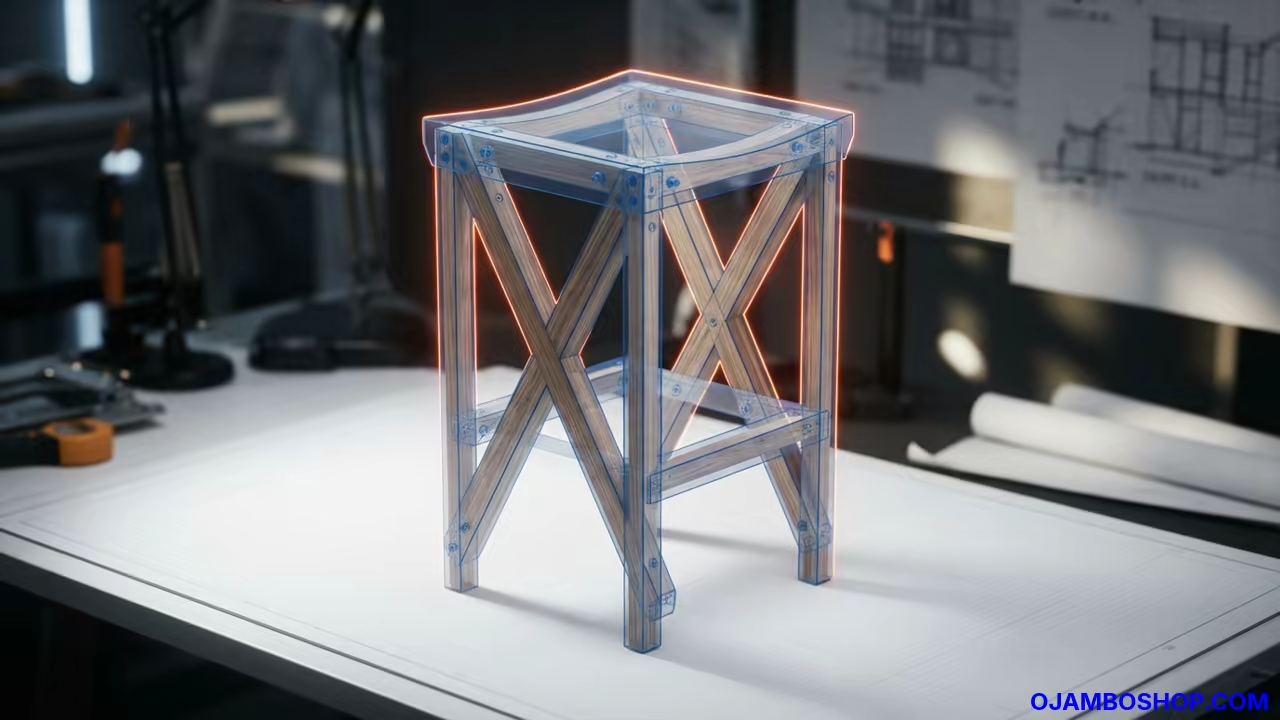
    Mobile Shop Workbench With Integrated Table Saw Stand Technical Framing Detail
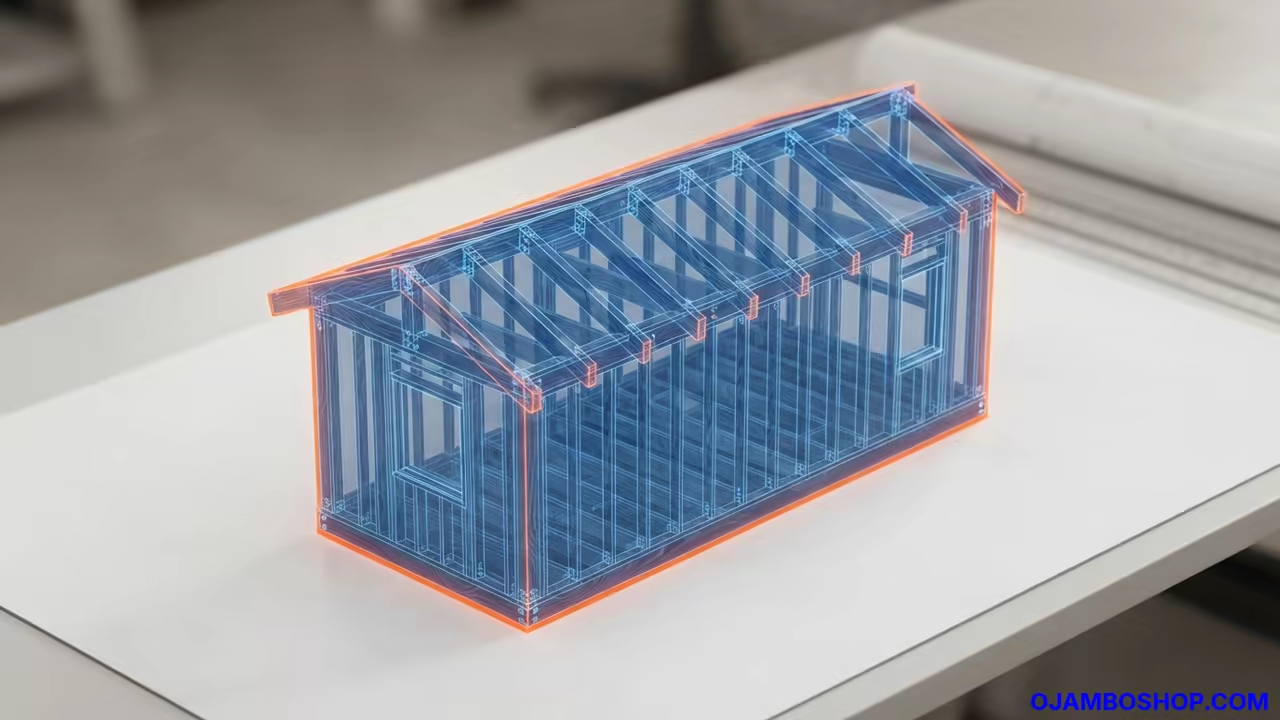
    Mobile Shop Workbench With Integrated Table Saw Stand Structural Detail

    Step by Step Instructions

    Phase 1: Base Frame Construction

    Phase 1 starts with the construction of the base frame where you will cut four 72 inch rails and six 27 inch cross members. Lay these out on a flat floor and assemble the outer rectangle first using wood glue and two 3 inch screws per joint. Ensure the frame is square by measuring diagonally from corner to corner until both numbers are identical.

    Phase 2: Internal Ribs and Housing

    Phase 2 involves installing the internal ribs of the base frame while leaving a specific gap for the table saw cavity. Measure the width of your table saw plus one inch of clearance and position two internal headers to create the housing. Use a pocket hole jig to secure these internal members so they do not interfere with the plywood decking later on.

    Phase 3: Leg Assembly

    Phase 3 focuses on the leg assembly where you will create four L-shaped legs by joining two 2x4s together with glue and screws. This shape provides much higher resistance to racking than a single 4×4 post and allows for easier mounting of the internal shelves. Set the height of these legs by subtracting the thickness of your casters and the 3 inch top deck from your desired final height.


    Phase 4: Caster Installation

    Phase 4 is the installation of the heavy duty locking casters to the bottom of the base frame. Flip the frame over and pre-drill holes for the carriage bolts to avoid splitting the grain of the 2x4s. Use large washers on both sides of the bolt to distribute the pressure and tighten the nuts firmly with a socket wrench.

    Phase 5: Recessed Saw Cradle

    Phase 5 requires building the recessed saw cradle which is the most precise part of the entire project. Cut a plywood base that matches the footprint of your saw and secure it between the internal headers at the exact depth required for flush alignment. Pro-Tip: It is better to build the cradle 1/8 inch too deep and use metal shims to bring the saw up to level than to build it too shallow.

    Phase 6: Bottom Shelf Installation

    Phase 6 involves cutting and installing the bottom shelf which adds significant lateral stability to the entire structure. This shelf provides a massive amount of storage for heavy items like scrap wood or tool cases which also serves as ballast to keep the bench from moving. Secure the plywood to the base frame using 1.25 inch screws spaced every 8 inches along the perimeter.


    Phase 7: Plywood Top Deck

    Phase 7 is the preparation of the top work surface where you will rip your birch plywood to exactly 72 by 30 inches. Before securing it use your circular saw to cut the opening for the table saw to match the cradle built in Phase 5. Use a jigsaw to clean up the corners and ensure the saw can be dropped in easily without forcing the fit.

    Phase 8: Final Structural Assembly

    Phase 8 is the final assembly where you apply a generous bead of wood glue to the top of the wall studs and lay the plywood deck in place. Counter-sink your screws so the heads sit below the surface of the wood to prevent them from scratching your future workpieces. Use a flush trim router bit if necessary to ensure the plywood is perfectly aligned with the 2×4 frame edges.

    Phase 9: Table Saw Leveling

    Phase 9 covers the installation of the table saw and the final leveling of the surfaces. Place the saw in the cradle and use a long straight edge to verify that the saw table is on the same plane as the workbench. Adjust the shims under the saw feet until a spirit level shows a perfectly continuous line across both the saw and the wood.


    Phase 10: Sanding and Finishing

    Phase 10 is the finishing stage where you sand all exposed edges with 120 grit and then 220 grit sandpaper to prevent splinters. Apply a coat of paste wax to the plywood top and the saw table to allow wood to slide effortlessly during cuts. Do not use a film-building finish like polyurethane on the top as it can become sticky over time and interfere with work piece movement.

    Hardware Comparison Table

    Hardware Type Strength Rating Best Use Case Cost Factor
    Standard Wood Screws Medium General Framing Low
    Pocket Hole Screws High Hidden Joinery Medium
    Carriage Bolts Maximum Caster Attachment Medium
    Structural Lag Screws Maximum Main Headers High


    Common Mistakes

    The most frequent error builders make is forgetting to account for the actual height of the locking casters. If you measure your legs based on the wood alone the added 4 to 5 inches from the casters will result in a workbench that is uncomfortably tall for ergonomic tool use. Always measure your favorite stationary tool height first and work backwards from that specific number.

    Another mistake is failing to use enough wood glue on the torsion box joints which leads to a bench that develops a squeak or a wobble within six months. Screws provide the clamping pressure but the wood glue provides the actual structural bond that prevents the wood fibers from shifting under vibration. Apply glue to every mating surface without exception to ensure a lifetime of service.

    Failing to check for square during the assembly of the saw cradle can lead to a saw that sits crooked relative to the fence. If the saw is not perfectly parallel to the workbench edges your miter gauge and fence extensions will never be accurate. Use a precision square to verify the cradle is exactly 90 degrees to the front rail before the glue sets.


    Maintenance and Safety

    To maintain the structural integrity of your mobile workbench you should inspect the caster bolts every six months. The vibration from power tools and the movement across garage floors can loosen the nuts over time which leads to dangerous instability. Use blue thread-locking fluid on the bolt threads during initial assembly to provide an extra layer of vibration resistance.

    Moisture management is critical if your workshop is located in a high humidity area or an unheated garage. Plywood edges are particularly susceptible to swelling if they absorb ground moisture or spills. Sealing the exposed edges of the plywood with a thin layer of wood glue or a dedicated edge banding will significantly extend the life of your work surface.

    Safety gear should always be utilized when operating the integrated table saw especially when cutting large sheets that require the outfeed support. Ensure your riving knife is installed and that the power cord for the saw is managed through a dedicated port in the bench to prevent tripping hazards. Always lock all four casters before performing any cuts to ensure the bench remains stationary while the blade is in motion.


    Conclusion

    By following this professional layout you create a tool that grows with your shop and provides a stable foundation for every project that follows. The combination of heavy duty mobility and integrated stationary tool support makes this the most valuable asset in any modern DIY workshop. Investing in a mobile shop workbench is the best way to reclaim your garage space without sacrificing the precision of professional-grade tools.

    Please disable AdBlock to enable the download button.
  • How to Build a Custom Tiny House Storage Stairs System for Maximum Space Efficiency

    How to Build a Custom Tiny House Storage Stairs System for Maximum Space Efficiency

    How to Build a Custom Tiny House Storage Stairs System for Maximum Space Efficiency

    Maximizing vertical space is the primary challenge in any small living environment. A storage stairs system serves as both a functional staircase and a high-capacity cabinetry unit for your home.

    This project transforms the often-wasted space beneath a loft access point into a series of deep drawers and shelving. By integrating structural integrity with aesthetic appeal, you significantly increase the overall utility and resale value of a tiny property.

    Professional builders prioritize these dual-purpose structures because they eliminate the need for bulky independent dressers. When executed correctly, these stairs become the architectural centerpiece of a minimalist living space while providing essential organizational capacity.


    Please disable AdBlock to enable the download button.


    Quick Specs

    Dimensions: 96 inches long by 30 inches wide by 84 inches high.

    Estimated Cost: $450 to $700 depending on the selected wood species and hardware quality.

    Difficulty Level: Advanced Beginner to Intermediate.

    Estimated Build Time: 16 to 20 hours of active labor across three days.

    Materials and Tools

    The foundation of a lasting staircase is the quality of the lumber and the precision of the fasteners used during assembly. For this project, you will require high-quality cabinet-grade plywood and structural dimensional lumber to ensure the unit does not deflect under weight.


    Lumber and Sheet Goods:
    * Three sheets of 3/4 inch Birch or Maple plywood for the carcasses and treads.
    * Two sheets of 1/2 inch plywood for the drawer boxes and backing material.
    * Four 2×4 kiln-dried studs for internal structural framing and floor anchoring.
    * 10 linear feet of hardwood edge banding to match your plywood species.

    Hardware and Fasteners:
    * Five pairs of 24-inch heavy-duty soft-close drawer slides.
    * One box of 1-1/4 inch pocket hole screws for carcass joinery.
    * One box of 2-1/2 inch wood screws for structural frame attachment.
    * High-strength wood glue and 1-1/2 inch brad nails for trim work.

    Required Tools:
    * Table saw or track saw for ripping large plywood sheets accurately.
    * Miter saw for cross-cutting framing members and stair treads.
    * Pocket hole jig for creating strong, hidden internal joints.
    * Power drill and impact driver with assorted driver bits.
    * Pneumatic brad nailer and an air compressor for finishing.
    * Level, speed square, and a chalk line for layout marking.


    Technical Layout

    The engineering of storage stairs differs from traditional residential framing because each riser must act as a structural pier. In a standard staircase, the stringers carry the entire load, but in a storage system, the plywood carcasses provide the vertical support. Each “box” in the system is designed to transfer the downward force of a person’s weight directly to the subfloor through the vertical gables.

    To ensure the unit remains rigid under dynamic loads, we utilize a combination of pocket-hole joinery and a 1/2 inch inset back panel. The back panel is not merely aesthetic; it acts as a shear wall to prevent the cabinetry from racking or leaning over time. Each step is calculated with a standard 10-inch run and an 8-inch to 10-inch rise to remain comfortable for daily use. We reinforce the leading edge of every tread with a solid wood nosing to prevent the plywood layers from delaminating under heavy foot traffic.


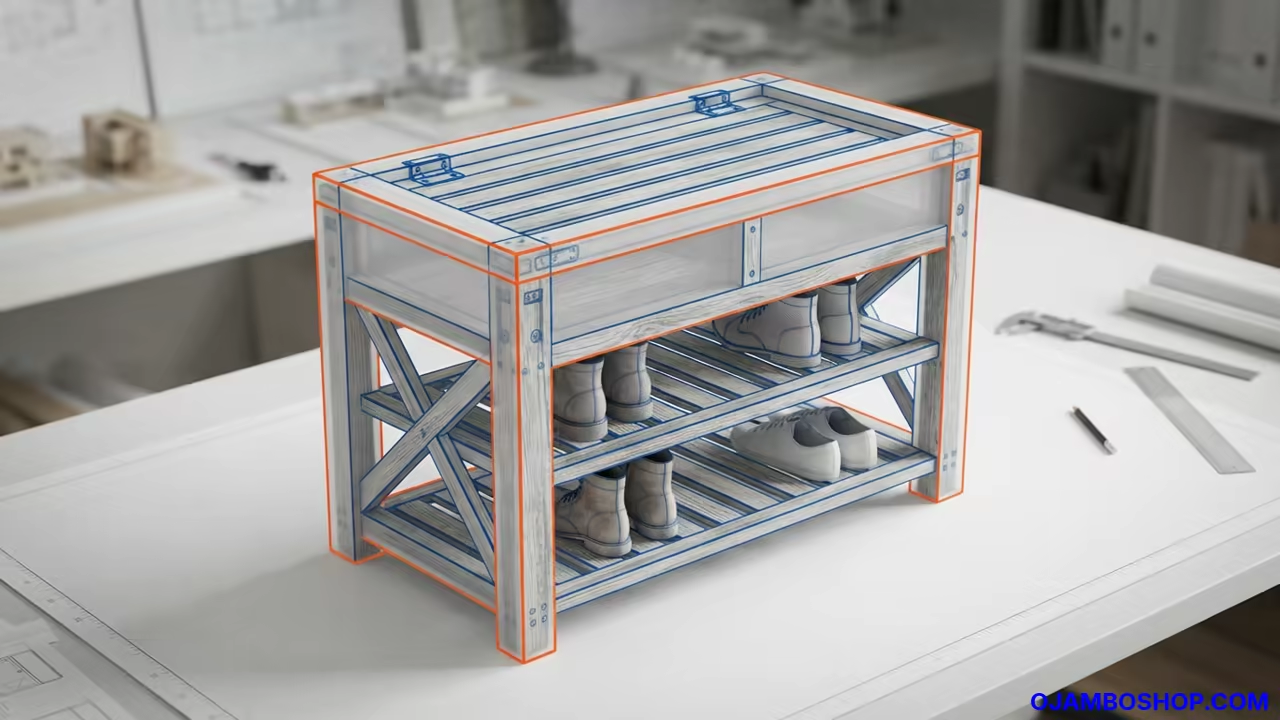
    Custom Tiny House Storage Stairs Technical Framing Detail
    Custom Tiny House Storage Stairs Structural Detail

    Step-by-Step Instructions

    Phase 1: Subfloor Preparation and Layout

    Begin by marking the footprint of the stairs on your floor and wall using a chalk line and a long level. Ensure the floor is perfectly level before beginning, as even a slight slope will cause the drawer slides to bind or roll open. If the floor is uneven, you must construct a level 2×4 base frame that is shimmed and anchored to the subfloor. Use a framing square to ensure the corner where the stairs meet the wall is exactly ninety degrees.

    Phase 2: Cutting the Plywood Carcasses

    Rip your 3/4 inch plywood sheets into 30-inch wide strips to match the total width of the staircase system. From these strips, cut the vertical gables for each step, decreasing the height of each subsequent piece by your calculated riser height. Label each piece clearly with its position in the assembly to avoid confusion during the complex joinery process. Precise cuts at this stage are critical for ensuring that the finished staircase is safe and visually aligned.


    Phase 3: Assembly of the Main Carcass Boxes

    Use a pocket hole jig to drill holes into the top and bottom horizontal stretchers of each stair module. Apply a generous bead of wood glue to every joint before driving the 1-1/4 inch screws to create a permanent bond. Assemble each step as an independent box, checking for squareness constantly with your speed square as you tighten the fasteners. Once the boxes are built, stack them in their final configuration to verify that the overall height and slope are correct.

    Phase 4: Installing the Structural Backing

    Cut pieces of 1/2 inch plywood to fit the back of each cabinet module, ensuring they are perfectly square to provide shear strength. Secure these panels using wood glue and 1-inch staples or brad nails spaced every six inches along the perimeter. This backing prevents the stairs from wobbling laterally when a person climbs to the top loft level. For the sections that will remain open shelving, you may choose to finish the back panels with a decorative veneer or paint.

    Phase 5: Building the Drawer Boxes

    Construct the drawer boxes using 1/2 inch plywood for the sides and 1/4 inch plywood for the captured bottom panels. The drawers should be exactly 1 inch narrower than the internal cabinet opening to accommodate standard 1/2 inch side-mount drawer slides. Use simple butt joints reinforced with glue and nails, or upgrade to drawer-lock router bits for a more professional finish. Sand the top edges of the drawer boxes smooth to prevent snagging on clothing or stored items.


    Phase 6: Mounting the Heavy-Duty Slides

    Install the drawer slides by marking a level line on the inside of the cabinet gables at the desired height. Use a dedicated drawer slide jig to ensure the left and right tracks are perfectly parallel and aligned with the front face. Secure the corresponding members to the drawer boxes, ensuring they sit flush and operate without resistance. Test the motion of each drawer multiple times to ensure the soft-close mechanism engages properly and the drawer sits level.

    Phase 7: Installing Treads and Risers

    Cut the 3/4 inch plywood treads so they overhang the front of the cabinet by approximately 1 inch to create a traditional look. Apply wood glue to the top edges of the cabinet carcasses before laying the treads and securing them with finish nails. For the risers, you can use thin 1/4 inch plywood or the drawer fronts themselves to create a seamless vertical appearance. Ensure all fasteners are countersunk so they can be filled with wood putty later in the finishing process.

    Phase 8: Edge Banding and Sanding

    Apply iron-on hardwood edge banding to all exposed plywood edges to give the project the appearance of solid timber furniture. Use a sharp chisel or a dedicated edge banding trimmer to remove the excess material for a flush, professional finish. Sand the entire unit starting with 120-grit sandpaper and progressing to 220-grit for a smooth surface ready for stain or paint. Pay close attention to the corners of the treads, rounding them slightly to prevent sharp edges from causing injury.


    Phase 9: Final Finishing and Sealing

    Vacuum all dust from the unit and wipe it down with a tack cloth to ensure a clean surface for the topcoat. Apply at least three coats of high-traffic polyurethane or floor-grade sealer to the stair treads, as they will endure significant wear. For the cabinet faces and drawer fronts, a matching stain or a durable enamel paint will provide a cohesive look with the rest of the home. Allow the finish to cure for at least 48 hours before walking on the stairs or installing the drawer hardware.

    Common Mistakes

    The most frequent error in tiny house stair construction is failing to account for the thickness of the treads when calculating the first and last step height. If you do not subtract the tread thickness from the bottom riser, the first step will be too high, creating a significant tripping hazard. Always double-check your rise and run math against local building codes, even if you are building for a mobile or non-traditional structure.

    Another common mistake is choosing low-quality drawer slides that cannot handle the weight of heavy storage or the vibrations of a moving tiny house. Using slides rated for at least 100 pounds ensures that the drawers stay closed during transit and do not sag over time. Many builders also forget to leave a small expansion gap between the stairs and the adjacent walls, which can lead to squeaking as the house shifts.


    Finally, many DIY enthusiasts skip the wood glue, relying solely on mechanical fasteners to hold the structure together under load. In a small living environment, the constant movement of people on the stairs will eventually loosen screws if they are not reinforced with glue. A glued and screwed joint is significantly stronger and will remain silent and sturdy for the life of the home.

    Maintenance and Safety

    Pro-Tip: When building stairs for small living spaces, structural integrity depends heavily on the moisture content of your lumber. Always use kiln-dried wood and apply a moisture barrier or high-quality sealant to all sides of the plywood, including the undersides. This prevents the wood from warping due to the humidity fluctuations common in small, tightly-sealed homes, ensuring your drawers never bind.


    Material Type Pros Cons Best Use
    Birch Plywood Excellent strength, beautiful grain, takes stain well. More expensive than construction grade. Main carcasses and visible treads.
    MDF Core Extremely flat, very easy to paint, cost-effective. Heavy, poor moisture resistance, holds screws poorly. Internal partitions or painted drawer fronts.
    CDX Plywood Very cheap, structurally sound for hidden parts. Rough surface, prone to splinters and voids. Hidden structural framing only.
    Solid Hardwood Most durable, highest aesthetic value, can be refinished. Very expensive, prone to seasonal expansion. Tread nosing and decorative trim.


    To maintain your stairs, inspect the drawer slides once a year and tighten any screws that may have vibrated loose from use. Clean the treads with a damp cloth and avoid using wax-based cleaners which can make the steps dangerously slippery. If you notice any squeaking, you can usually resolve it by injecting a small amount of wood glue into the joint or adding a decorative trim piece to further stiffen the assembly. Always wear a dust mask and eye protection when cutting plywood, as the glues used in manufacturing can release irritating particulates during the sanding process.


    Please disable AdBlock to enable the download button.
  • How to Build a Predator-Proof A-Frame Chicken Coop That Lasts a Lifetime

    How to Build a Predator-Proof A-Frame Chicken Coop That Lasts a Lifetime

    How to Build a Predator-Proof A-Frame Chicken Coop That Lasts a Lifetime

    As a Master Carpenter, I’ve seen countless “kit” coops fall apart after a single season. A professional chicken coop is specialized agricultural architecture. This 8×10 A-Frame design provides the perfect balance of ventilation, predator protection, and structural shedding of the elements.

    Please disable AdBlock to enable the download button.

    Quick Specs

    • Dimensions: 8’ (W) x 10’ (L) x 8.5’ (H)
    • Structure: 60-Degree Equilateral A-Frame
    • Capacity: 12–15 Chickens

    Technical Layout & Structural Analysis

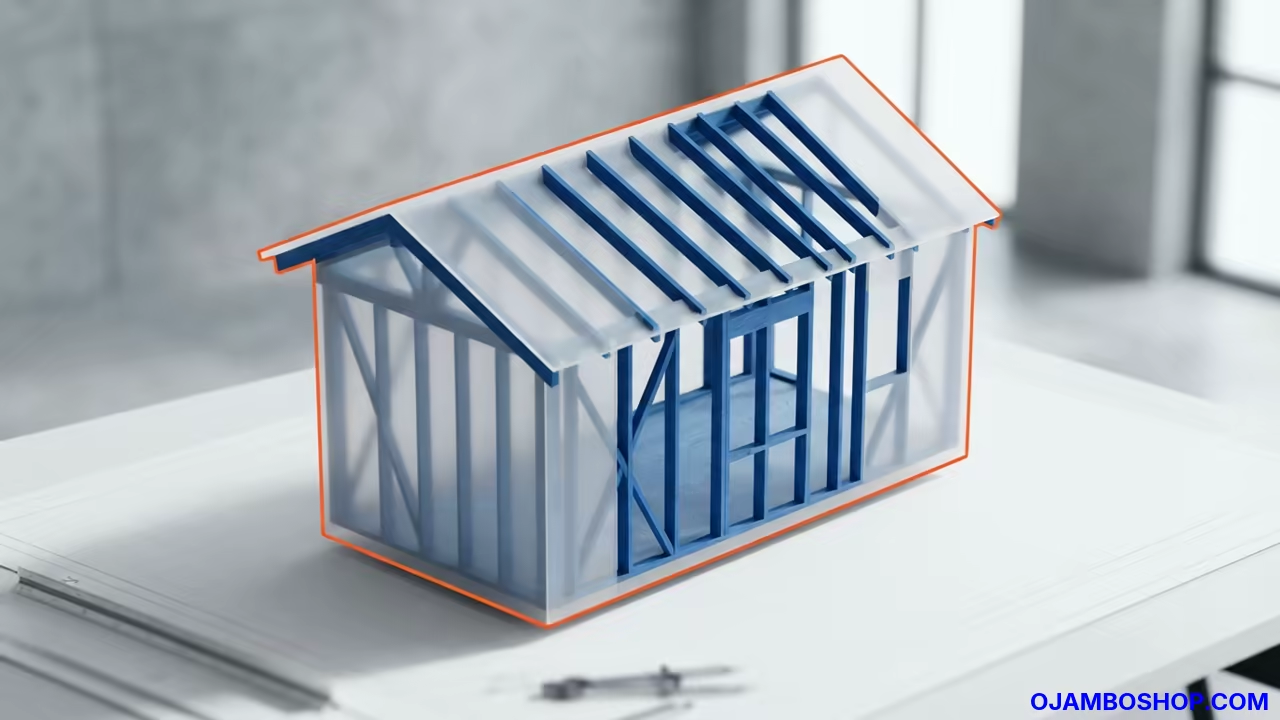
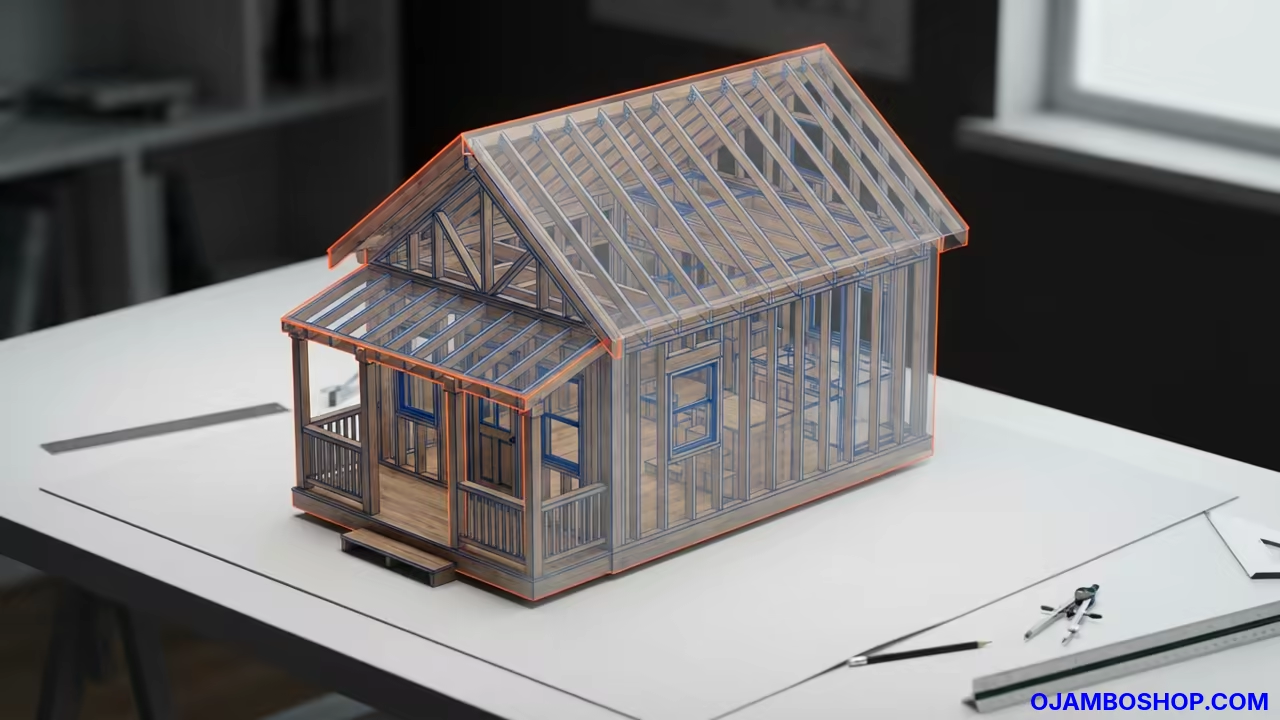
    8x10 A-Frame Chicken Coop Technical Framing Detail
    Detailed framing diagram showing the 60-degree rafter geometry and mitered heel cuts.

    The structural integrity of this A-frame coop relies on the triangulation of the rafters. By connecting the rafters directly to the 8×10 floor perimeter at a 60-degree angle, we create a rigid geometric shape that requires zero internal vertical studs. This maximizes interior “living” volume for your flock.

    From a carpentry perspective, the critical detail is the mitered heel cut. Instead of a traditional bird’s mouth, the rafters are mitered at the base to sit flush against the floor joists, secured with structural screws. To prevent predators from burrowing, we implement a “hardware cloth apron” that extends 12 inches out from the 4×4 skids and is buried 6 inches deep. This prevents foxes or raccoons from prying under the base frame.

    Step-by-Step Instructions

    Phase 1: The Foundation Skids

    Clear a 10×12 area and level it with pea gravel. Lay two 4×4 x 10’ PT skids exactly 8 feet apart (outer edge to outer edge). These act as the “rails” for the entire structure, keeping the wood off the ground and away from moisture.

    Phase 2: The Floor Platform

    Build an 8×10 rectangular frame using 2×4 PT joists. Lay this frame directly onto the 4×4 skids and secure with 3″ galvanized lag screws. Install 3/4″ PT plywood subfloor. Pro-Tip: Use exterior-grade construction adhesive on the joists before screwing down the plywood to eliminate gaps where mites could nest.

    Phase 3: The A-Frame Rafter Assembly

    Cut twelve 2×4 rafters at a 60-degree angle at the peak and a matching 30-degree miter at the heel. Use a 10-foot 2×4 ridge board to align the peaks. Each rafter heel must be flush with the outer edge of the floor platform. Secure each pair with a collar tie 24 inches down from the peak for lateral wind-load resistance.

    Phase 4: Gable Ends and Run Area

    Install T1-11 siding on the front and back “Gable Triangles” only. On the main slopes of the “A,” leave the bottom 4 feet of one side open for the hardware cloth “run” area. This allows for maximum cross-ventilation while keeping the sleeping area sheltered.

    Phase 5: The External Nesting Boxes

    Build a “bump-out” box on the rear gable end. Position it 18 inches off the floor to keep eggs clean. Use a piano hinge on the lid for weather-tight egg collection access.

    Phase 6: Predator Proofing (Hardware Cloth)

    Wrap the lower “run” sections and gable vents in 1/2″ hardware cloth. Secure with 1.5″ galvanized staples every 3 inches. Safety Note: Never use standard chicken wire; it can be shredded by a determined raccoon.

    Phase 7: Interior Roosts and Cleated Ramp

    Install 2×4 roosting bars (wide side up) at tiered heights. Construct a 10-inch wide ramp with 1×2 cleats spaced every 4 inches to provide traction for the birds entering the upper coop area.

    Phase 8: Roofing and Flashing

    Install corrugated metal panels directly over the rafters. Overlap by two ribs and use roofing screws with rubber washers. Install 1×4 trim on the gable peaks to seal the ridge line.

    Phase 9: Finishing and Sealing

    Apply a low-VOC exterior paint to the gable ends. For the interior floor, apply a remnant piece of linoleum or a “Deck Shield” coating to make the deep-litter cleaning process effortless.


    Maintenance & Safety Professional Advice

    Wood Treatment and Longevity

    Chickens produce a high-ammonia environment. To protect the structure, inspect the floor annually for moisture penetration. If you notice “soft spots,” address them immediately with a wood hardener or section replacement. Check the hardware cloth apron for signs of prying or rust every spring.

    The “Arsenic” Myth & Modern Safety

    Modern Pressure-Treated (PT) lumber is safer than the old CCA-treated wood, but as a Master Carpenter, I still advise caution. Never use PT lumber for the roosting bars or nesting boxes where the birds’ skin will have direct contact for 8+ hours a night. Use Kiln-Dried (KD) whitewood or cedar for these interior components to ensure a respiratory-safe environment.

    Hardware Safety

    Ensure all fasteners are hot-dipped galvanized. Chickens are naturally curious and will peck at anything shiny; non-galvanized hardware can lead to “Zinc poisoning” over time. Countersink your screws in the roosting area to prevent “Bumblefoot” (foot infections caused by sharp metal edges).

    Please disable AdBlock to enable the download button.